Last updated November 17, 2026


Free written scope consultation - allowances, timeline, and change-order rules on paper before a single trade is scheduled
Bathroom Remodeling Warning Signs Every Homeowner Should Know
A bid that comes in 30% below two comparable quotes is not a deal. In bathroom remodeling, a quote that far under the others is statistically more likely to be a scope gap, an unlicensed subcontractor, or materials substitution than genuine efficiency. We’ve walked into Santa Rosa bathrooms where the first sign of trouble was a number that looked too good on paper. This guide is about the signs that come before the disaster: what to check before you sign, what to watch during demolition, and what a crew’s work habits reveal mid-construction, so you can catch a costly outcome while it’s still fixable.
Quick Answer
The biggest bathroom remodeling warning signs are an untertilized bid, vague allowances, no CSLB license number on the estimate, prior unpermitted work discovered during demolition, and a missing flood test on the shower pan. Any one of these predicts a higher final cost, a failed inspection, or both. Catch them before you sign, and you avoid most of the ways a bathroom project goes wrong.
Styles & brands we work with
- Kitchen remodeling
- Bathroom remodeling
- Home additions & ADU
- Roofing
- Windows & doors
- Driveway & pavers
- Fence
Table of Contents
- Pre-Contract Warning Signs
- The Allowance Trap
- How to Verify a Contractor’s License in Two Minutes
- Warning Signs During Demolition
- Mid-Construction Warning Signs
- Change Orders and California Law
- Santa Rosa-Specific Warning Signs
Pre-Contract Warning Signs
Most of what goes wrong in a bathroom remodel is decided before anyone swings a hammer. The bid is the first document where a contractor shows you how they think. Read it the way you’d read a contract, because it is one.
Here’s what to look for before you sign anything:
- No itemized line-item bid. A single lump-sum number with no breakdown means you can’t tell what’s included. You want to see separate lines for demolition, framing, plumbing rough-in, electrical, tile, waterproofing, fixtures, and finish. If the contractor can’t itemize, they can’t defend a price.
- No CSLB license number printed on the estimate. California requires licensed contractors to put their license number on contracts and estimates. Omission is a red flag, not a formatting choice.
- No written scope. “Full bathroom remodel” is not a scope. Scope describes what’s being removed, what’s being installed, and what’s excluded. The exclusions matter most.
- No written warranty terms. A guarantee that lives only in conversation is not a guarantee.
- Pressure to decide fast, or a discount that expires. No legitimate contractor needs your signature today.
- Cash-only or a large deposit above 10%. California caps deposits on home improvement contracts at 10% of the contract price or $1,000, whichever is less.
The strongest bids we see, including the ones we write, carry a flat written price and a written scope before work starts. Under Clause 1, the price is written before anyone starts, and it stays the number unless a signed change order says otherwise. That’s the whole reason the discipline exists.
The Allowance Trap
An allowance is a placeholder number in a bid for a material the homeowner hasn’t picked yet. It’s a legitimate tool. It’s also the single most common way a bathroom bid understates the true cost.
Consider a common example: a bid lists “tile allowance $500” for the shower walls. The homeowner assumes that covers the tile. It doesn’t. A specified ceramic tile that costs $12 per square foot installed, across roughly 40 square feet of shower wall, runs about $480 in material alone before mortar, membrane, trim, and labor. If the allowance is written as a total rather than a per-square-foot rate, the gap between it and reality can add a four-figure surprise.
What a fair allowance looks like:
- Written as a dollar rate per square foot, not a lump total.
- Names the example product, so you can compare it to what you actually want.
- States in writing how an overage is billed if you choose something above the allowance.
- Lists allowances for tile, fixtures, vanity, counters, and lighting separately.
Ask any contractor to convert allowance language into a line-itemized range for the products you plan to install, in writing, before signing. If they won’t, that’s your answer.
How to Verify a Contractor’s License in Two Minutes
This is the step most homeowners skip, and it takes less time than making coffee. Every licensed California contractor is listed in the Contractors State License Board database.
- Go to the CSLB website and open the license lookup tool.
- Enter the license number printed on the bid, or search by the contractor’s business name.
- Confirm the status reads “Active” and that the license classification matches the work.
- Check the “personnel” section to confirm the individual you’re dealing with is listed on the license. If they’re not, ask why.
- Read the complaint and disciplinary history. A single old complaint is not disqualifying, but a pattern of them is.
License classifications matter for bathroom work in particular. A B (General Building Contractor) license allows the contractor to take a whole-bathroom project and coordinate all trades. A C-36 (Plumbing Contractor) covers plumbing rough-in, drainage, and fixture setting. A C-10 (Electrical Contractor) covers wiring, receptacles, exhaust fans, and lighting circuits. A B-licensed contractor can hold the whole job and bring in C-36 and C-10 work under their oversight, or the general contractor can self-perform some plumbing and electrical within the limits the CSLB allows. What you don’t want is a handyman doing a permit-required bathroom under a license that doesn’t cover the work.
If a contractor can’t tell you their classification off the top of their head, ask them to show you the license. It’s public record.
Warning Signs During Demolition
Demolition is where the hidden conditions surface. A bathroom that looks solid above the tile can hide rot, prior unpermitted work, and pipes nobody expected. What matters is how your contractor handles what they find.
Expect these three things to appear in Santa Rosa bathrooms, and watch how they’re reported:
- Subfloor rot beyond the visible scope. Bathroom floors near tubs and showers routinely rot from years of small leaks. If the contractor finds rot and tells you it needs replacement, they should show you photos of the damaged area and write a change order with a price. If they report rot without evidence, that’s a problem. If they replace it without telling you, that’s worse.
- Evidence of prior unpermitted work. Look for a drain that sits lower or higher than code allows, a missing P-trap under the sink (so the drain runs straight to the wall with no water seal), or a vent that terminates in the attic. These are tells that a prior owner did the work without a permit. During a permitted remodel, your contractor has to bring those conditions up to code, and that cost belongs in a change order with an explanation, not on a verbal “we had to redo it.”
- Galvanized supply lines that weren’t disclosed before work started. Lots of Santa Rosa homes built before 1970 still run galvanized steel water lines. They clog internally, corrode at the fittings, and quickly leak once disturbed. If your contractor finds galvanized pipe during rough-in and didn’t flag the possibility during the estimate, ask why that wasn’t a known risk.
A documented photo record on every visit is what makes these surprises manageable. The customer should see what the crew saw, in writing, at the point of discovery. This is how you keep a project inside a few percent of the agreed cost rather than watching the number climb.
Mid-Construction Warning Signs
Mid-construction is when the invisible work gets done. The mistakes made here get buried under tile and only surface as failure years later. Learn to spot them and to ask the right questions.
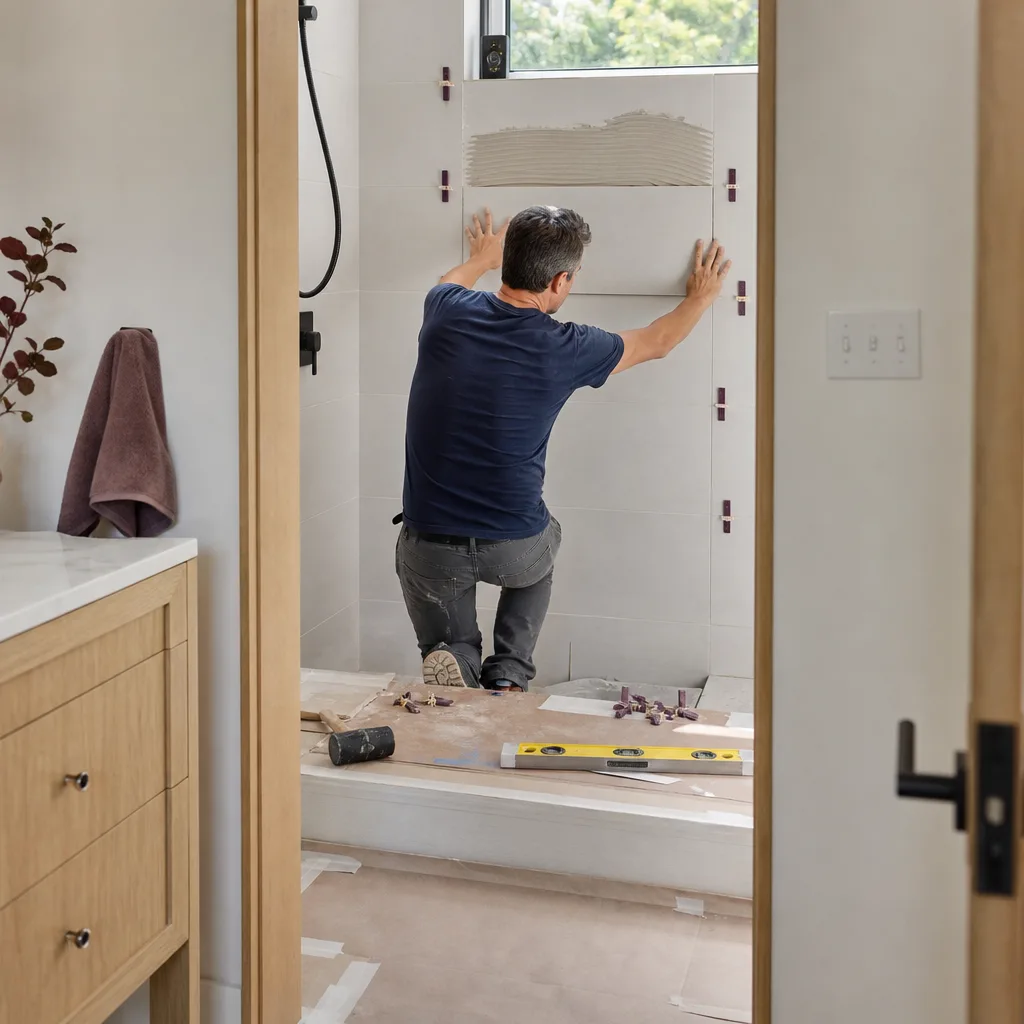
Shower pan liner installed without a flood test. A flood test (also called a water test) is a standard step: the contractor fills the shower pan with water to a marked level for 24 hours and confirms it holds. A pan that leaks is a failure waiting to happen, and the only way to catch it is to flood-test before the tile goes down. Ask when the flood test is scheduled, and ask for the photo record of it. Any hesitation is a warning sign.
Tile set directly on drywall in a wet zone. Drywall is not a substrate for wet areas. In a shower, tile should sit over a cement backer board or a bonded waterproofing membrane. Drywall in a wet zone wicks moisture, mold grows behind the tile, and the whole wall fails within a few years. Worth asking, and one you can verify with a photo.
Uneven grout joints before grouting. If the tile spacing looks inconsistent before the grout goes in, the tiles weren’t properly back-buttered (the technique where mortar is applied to the back of each tile to achieve full coverage). Spot-bonded tile, where only the corners get mortar, is a cosmetic-only install disguised as a proper one. It fails early.
Other signs to watch as the work progresses:
- Exhaust fan vented into the attic or crawlspace instead of outdoors.
- No waterproofing membrane at the curb of the shower.
- Electrical outlet placed inside a wet zone without GFCI protection or the required cover.
- Plumbing drain slope that runs uphill or flat to the main.
Change Orders and California Law
A change order is the paper that protects both sides when the scope changes. Under California Business and Professions Code, a home improvement contract must be written, signed by both parties, and describe the work, materials, and price. Any change to that scope needs a signed change order that does the same thing.
A valid change order should contain:
- The date and identification of the original contract.
- A description of what’s changing, in plain language.
- The specific material or labor being added or removed.
- The dollar amount added or credited, itemized.
- The effect on the project schedule, if any.
- A signature line for the homeowner and the contractor.
Verbal approvals are not enforceable. If a contractor says “we’ll just add that and settle up later” and no document follows, the homeowner has no evidence of the agreed price. In a dispute, the contractor’s most likely recollection is that the price was higher. Put it in writing, sign it, keep a copy. This is the discipline that keeps projects inside the number both parties agreed to.
Santa Rosa-Specific Warning Signs
Santa Rosa’s housing stock and climate create a particular set of bathroom risks. Being local to the market here matters when you’re evaluating bids.
Older Santa Rosa homes near the Junior College neighborhood, Cherry Street, and the West End were often built between 1920 and 1960. Galvanized supply lines, cast iron drains, and prior unpermitted additions are common in this stock. A contractor who doesn’t ask about the home’s age and pipe material in the first conversation is likely to hit those surprises mid-project.
Farther out, in Coffey Park and the Mark West area, homes rebuilt after the 2017 fires are now hitting the ten-year mark. Rebuilt bathrooms typically have modern materials and permits, but the fire rebuild process left a handful of homes with inconsistent documentation. Ask to see the building department’s record of the prior work before starting.
Climate matters too. Santa Rosa’s damp winters and dry summers cause wood framing to move seasonally. Tile backer that’s installed too tight to the framing, or a shower curb that’s built without a moisture membrane, will crack during the dry season before the next wet winter exposes it. A contractor who talks about seasonal movement and specifies proper membrane thickness is telling you they’ve done this in Santa Rosa before.
Finally, watch how any Santa Rosa contractor handles permits. Bathroom remodels that move plumbing, electrical, or framing require permits from the City of Santa Rosa. A contractor who offers to skip the permit to save time is offering you a future problem at resale.
Common Mistakes to Avoid
- Choosing the lowest bid without reading the scope. The lowest number is only a bargain if the scope is identical. Itemize and compare.
- Accepting a verbal allowance. In Santa Rosa, tile selections often run above a generic allowance. Get the rate per square foot in writing.
- Skipping the CSLB lookup. Two minutes at the state database tells you more than any review on Yelp.
- Approving a change without a signed order. The bill goes up and the record goes silent. Signed change orders are the only protection.
- Not asking for the flood test. The pan is the shower. If it leaks, the whole job is coming back out.
- Overlooking the exhaust fan. A fan vented into the attic in a Santa Rosa winter pushes moisture straight into cold framing.
- Skipping the permit because “it’s just a bathroom.” Unpermitted work follows the house to resale and can stall a future sale.
See the difference
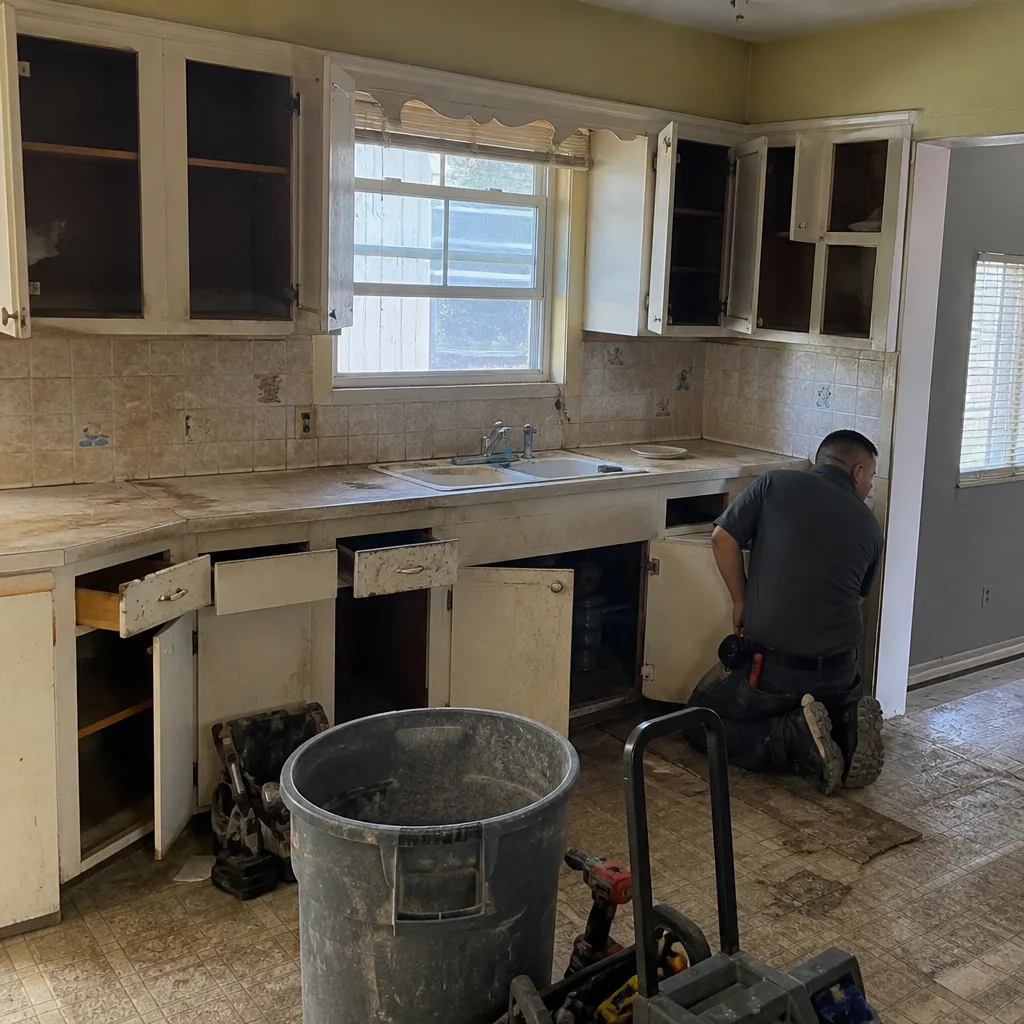 Before
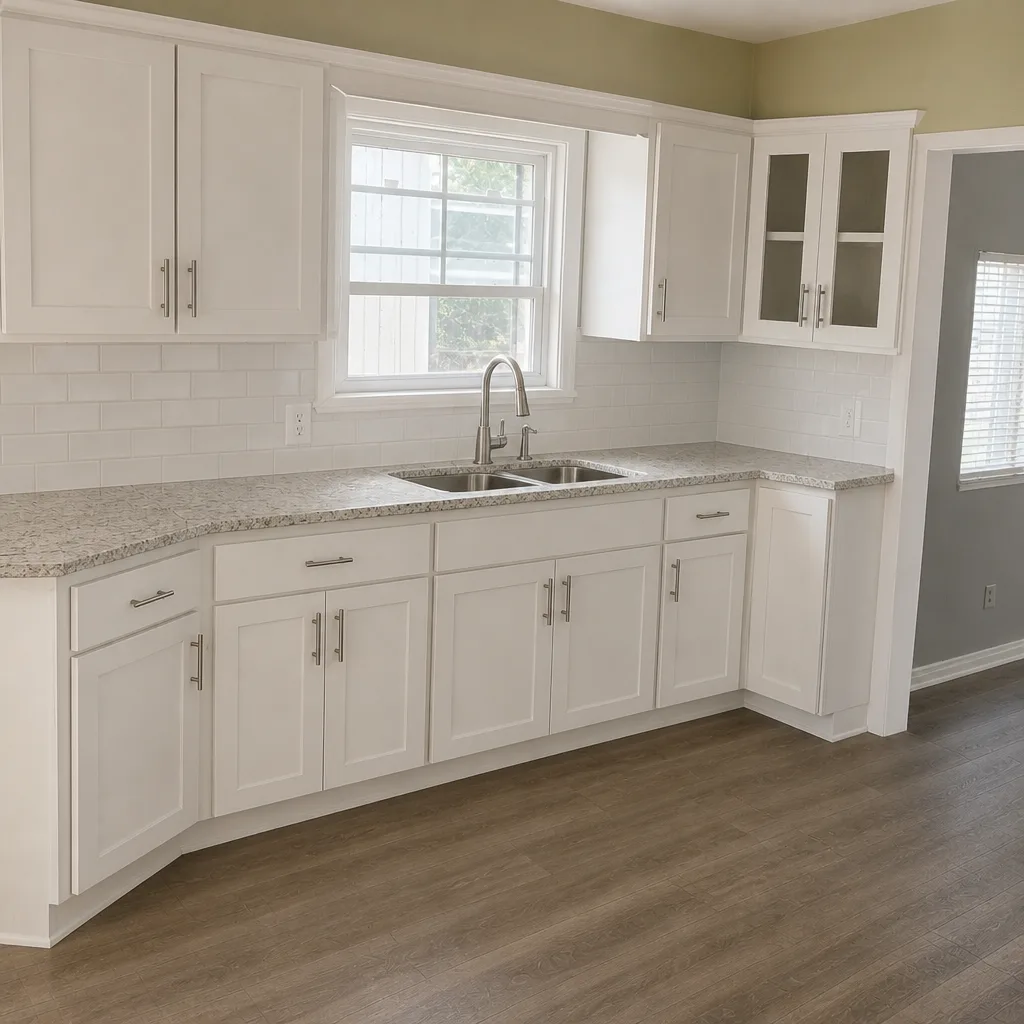 After
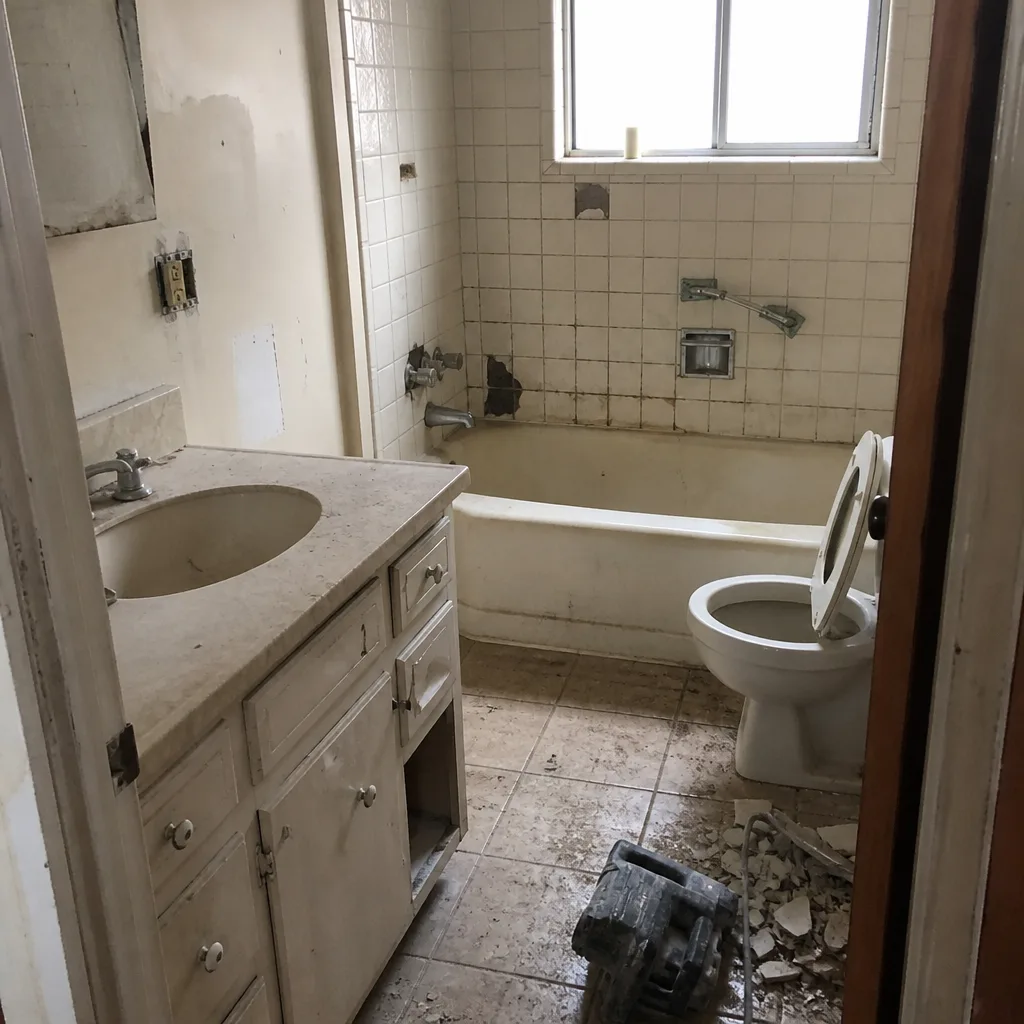 Before
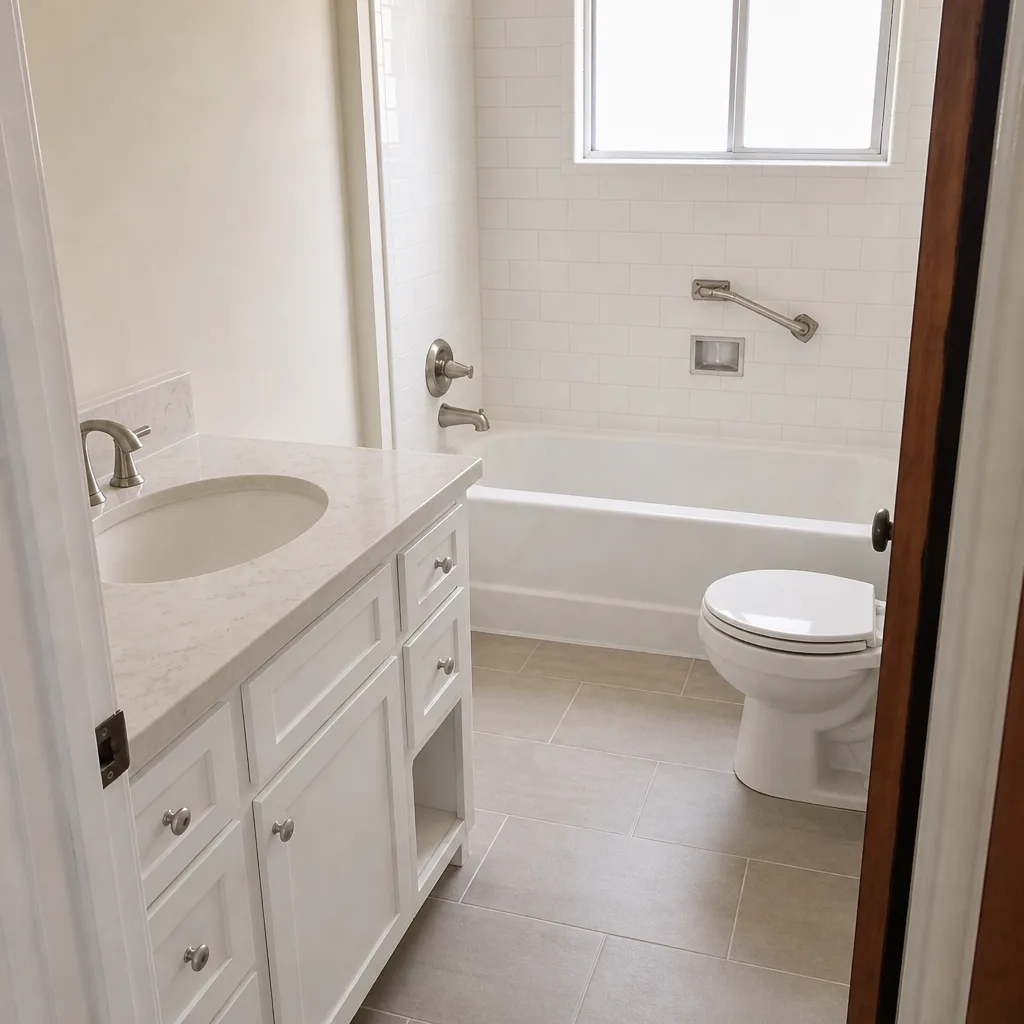 After
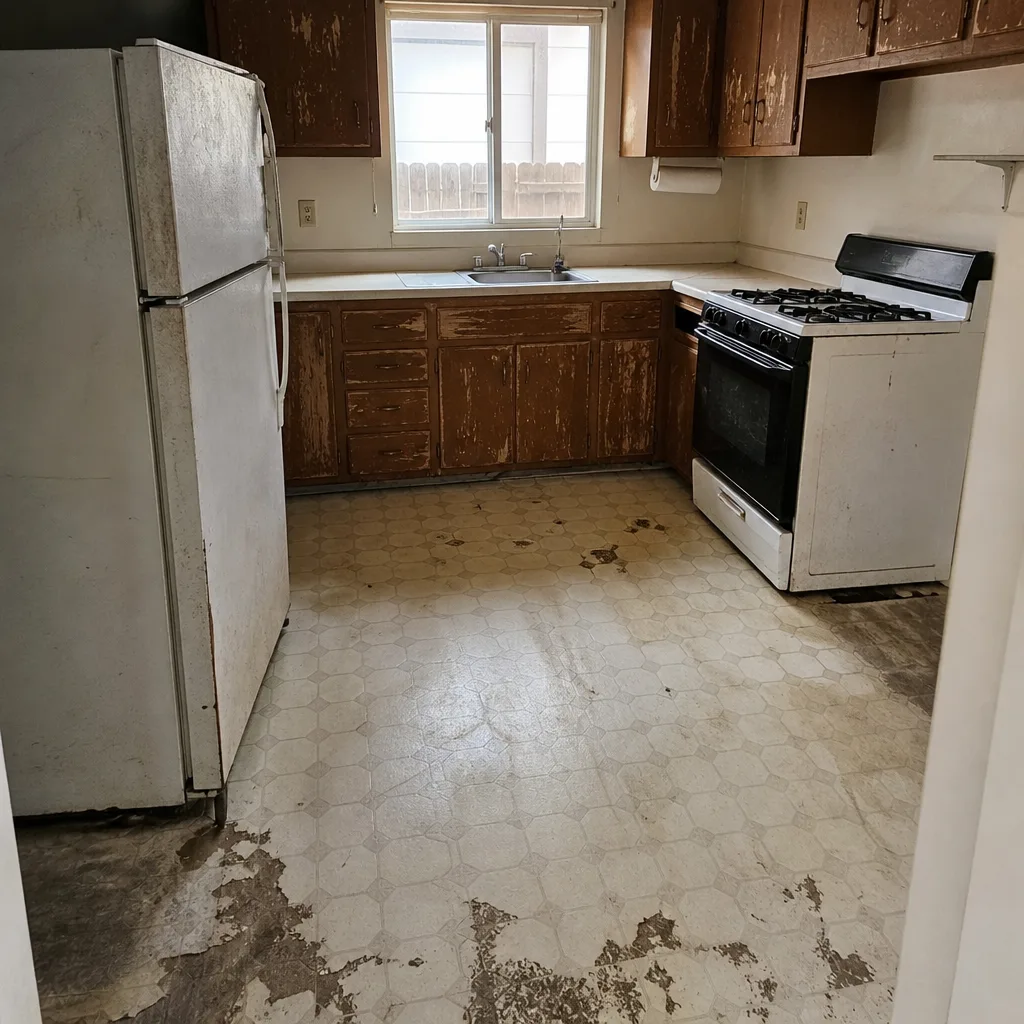 Before
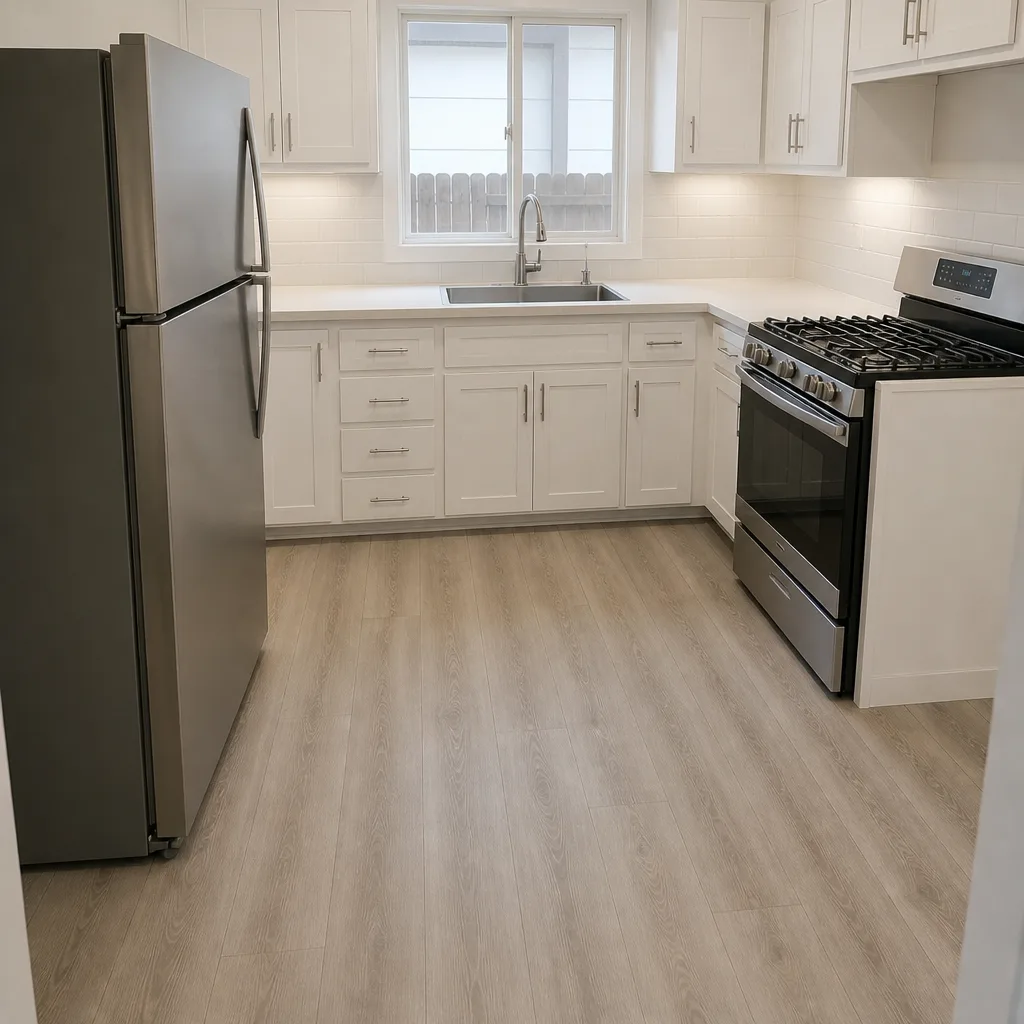 After
When to Call a Professional
If you’ve read this far and recognized more than one warning sign on your own project, or if you’re holding a bid that looks complete but hasn’t given you a line-item breakdown, that’s the moment to get a second read. Bring us the competitor’s quote and we’ll review it line by line at no charge, as a free second opinion. If the concern is structural (rot under the floor, cracked joists, missing framing), a full bathroom flow that hits several trades at once, or a permit situation, a C-licensed contractor and a permitted scope are the only safe path. Our technicians have up to 19 years of experience across those seven trades, and Rowan Construction Group Santa Rosa offers free estimates in Santa Rosa. Call (833) 842-1866 to schedule yours.
Related reading: Rowan Construction Group Santa Rosa home, Driveway & Pavers in Santa Rosa, Fence Installation in Santa Rosa, and Home Additions & ADU in Santa Rosa.
Frequently Asked Questions
The single biggest red flag is a bid without an itemized line-item breakdown and without a CSLB license number printed on it. Those two omissions mean you can’t verify either the price or the contractor. A bid that clears both checks, with a written scope and a written warranty, is a written record you can actually compare. Call (833) 842-1866 for a free second opinion on any bid you’re holding.
A mid-range full bathroom remodel in Santa Rosa typically runs between $22,000 and $45,000, depending on layout changes, tile selection, and whether plumbing or electrical needs updating. A cosmetic refresh (fixtures, vanity, paint) runs $8,000 to $15,000. A high-end remodel with custom tile, a curbless shower, and relocated drains can exceed $60,000. Call (833) 842-1866 for a written price range on your specific bathroom.
Yes, if you’re moving or replacing plumbing, electrical, or structural framing, or adding or relocating fixtures. The City of Santa Rosa’s Building Division requires permits for those changes, and the work is inspected. Cosmetic work (paint, tile replacement over existing substrate, new vanity that reuses existing supply lines and drain) typically doesn’t require a permit. When in doubt, ask the contractor to pull the permit and show you the inspection card. Call (833) 842-1866 if you want us to review whether your scope needs a permit.
Check the CSLB license lookup on the state board’s website and confirm the classification. A B (General Building) license covers whole-bathroom coordination, a C-36 (Plumbing) covers the plumbing rough-in, and a C-10 (Electrical) covers wiring and exhaust fans. A licensed general contractor can hold the whole job and bring in the specialty trades under their license. If the number isn’t on the bid, or the classification doesn’t match the work, ask why. Call (833) 842-1866 to see what a properly documented bid looks like.
Ask for photos of the damage and a written change order with a price for the repair before any additional work proceeds. Rot happens in most older Santa Rosa homes near the West End and Cherry Street, and the fix is legitimate. What matters is that you see the evidence and sign the price before the repair begins. If a contractor replaces rot without showing you photos or a signed change order, that’s a warning sign. Call (833) 842-1866 to review a change order you’re unsure about.
Check three things before the grout goes in: even spacing between tiles, no hollow spots when you tap the surface, and a visible waterproofing membrane or cement backer behind the tile in wet areas. Uneven spacing means the tiles weren’t properly back-buttered. Hollow sounds mean spot-bonding. No membrane means the substrate isn’t suited for a wet zone and will fail early. Call (833) 842-1866 if you want us to walk through a project you’re concerned about.
The Bottom Line
Most bathroom remodel disasters showed up as warning signs first: an untertilized bid, a vague allowance, a missing license number, prior unpermitted work found during demolition, a shower pan never flood-tested. Each is a moment to slow down and get the details in writing. The written price, the written scope, the written change order, and the documented photo record are the four documents that separate a project that stays on budget from one that doesn’t. If you’re in Santa Rosa and want a written price before any work starts, call (833) 842-1866 to schedule a free estimate.
Written by the team at Rowan Construction Group Santa Rosa.