
Bathroom Remodeling: Repair or Replace? How Santa Rosa Homeowners Decide
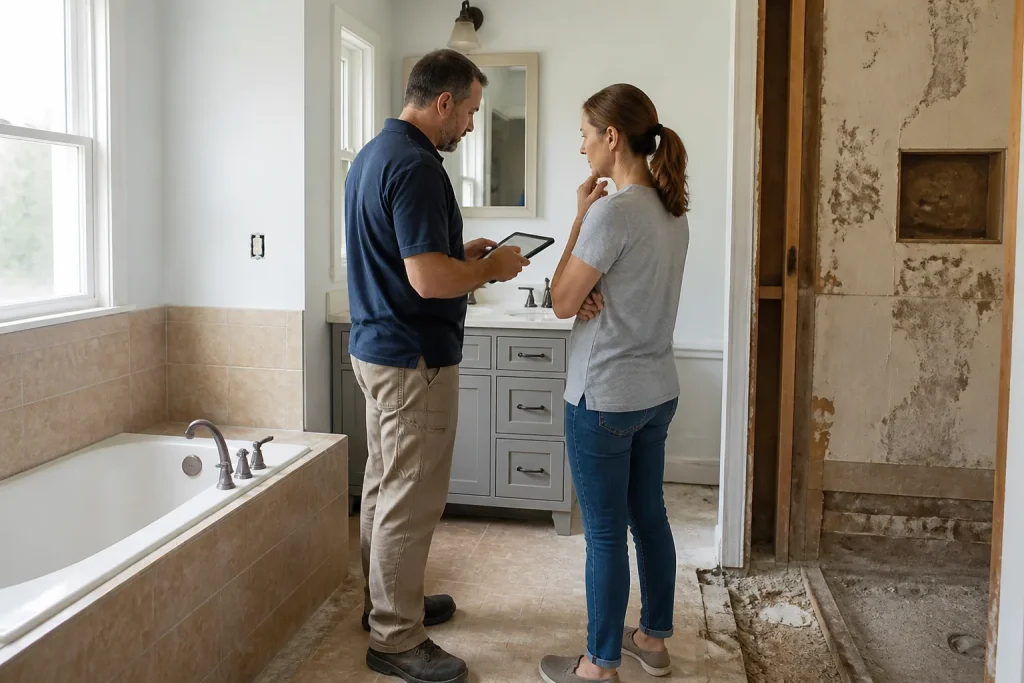
Retiling a bathroom over wet, delaminating cement board will fail in 18 to 24 months, no matter how good the tile looks on day one. In Santa Rosa’s older housing stock, where many bathrooms were last touched in the 1970s or 1980s, that failing substrate is the rule, not the exception. So the real question isn’t repair or replace – it’s whether the subfloor, backer board, and rough plumbing behind your walls are worth building on top of. If you’d rather have someone open the wall and tell you the truth, call (833) 842-1866.
Key Takeaways
- A surface-only refile over failing substrate isn’t a shortcut – it’s a two-year deferral of the job you actually need.
- Three conditions decide the answer: subfloor deflection, backer board moisture damage, and drain flange height.
- A camera inspection of the drain line usually costs less than the surprise repipe it prevents.
- Permits in Santa Rosa are triggered by moving walls, relocating drains, and adding circuits – not by retiling.
- Your signed contract should list substrate remediation scope and fixture allowances in dollars, not vague “allowances.”
Why does a bathroom retile fail so fast over a bad substrate?
Cement board is a tile backer, not a waterproof membrane. It’s meant to be covered by a vapor barrier or liquid-applied waterproofing, and when water gets behind the tile – through failed grout, a bad caulk joint, or a leaky shower valve – that board turns from a hard panel into a spongy one. Tile and grout are rigid, and spongy substrate isn’t. The assembly stops moving as one piece. Grout cracks, tile pops, and mold grows on the paper facing of the drywall behind it. Often nobody sees any of that until the tile in the next room starts walking.
We’ve seen a version of this play out dozens of times across Santa Rosa. The tile comes off, and what’s under it is dusty brown crumble instead of a solid panel, with the paper showing through. If the original job used mastic instead of thinset on a wet-wall substrate, the whole layer peels up by hand. A homeowner who’s already paid for tile installation now pays a second time to remove it, add the waterproofing that was missing, and redo the whole thing. The “cheaper” repair wasn’t cheaper for long.
The fix has a name in the trade: proper waterproofing. We use a cement backer such as Quikrete’s board spec or an equivalent, seal every seam and screw hole, then apply a liquid waterproofing membrane before any tile goes down. It’s a step you’ll never see again unless it’s missing.
The three substrate conditions that decide repair versus replace in Santa Rosa
1. Subfloor deflection. Deflection is how much the floor structure bends under load. A floor that moves more than the tile can tolerate will crack tile and grout no matter how well it’s installed. Older Santa Rosa homes – many built in the mid-century ranch style across neighborhoods like Rincon Valley and the Junior College area – often have 1x plank subflooring with thin plywood over it, or have been added onto in stages with a mix of framing. A tile setter with a level and a straightedge checks for it before bidding. If the floor flexes more than about 1/360 of the span under live load, a full replace that adds a proper underlayment is the honest call. That’s where Sakrete’s floor patch and leveling products earn their keep – leveling low spots so the new tile sits flat.
2. Backer board moisture damage. This is the obvious one. If the board sounds hollow when tapped, crumbles at the edges, or peels, the substrate has already failed. A repair that skips demo and goes straight to new tile is a cosmetic patch over a failing assembly.
3. Drain flange height. The drain flange is the metal ring that sits under the shower pan liner or above the waterproofing membrane, and the tile must sit flush with it. When someone tiles over the old floor without resetting the flange, or uses a thick-bed approach without reworking the drain connection, you end up with a flange that doesn’t sit at the correct height relative to the finished tile – and the water that pools around it finds its way into the wood below. Fixing it means opening the floor. If your inspector is already in there, that’s a replace.
Surface refile versus full gut remodel: what the numbers look like in Santa Rosa
Here’s where the two paths cost out. Santa Rosa labor rates in 2026 for a typical 50-square-foot hall bath:
- Surface refile (shower only, no substrate work): $1,200 – $2,400 for labor and material, assuming tile stays within a mid-range
- Demo: $400 – $900 for a shower pan and tile surround, more if the floor is involved
- Substrate replacement + waterproofing: $1,200 – $2,800 depending on the size and whether the subfloor needs work
- Rough plumbing inspection and partial repair: $300 – $800 for a camera inspection of the drain line, more if a valve body or a cast iron section needs repair
- Tile and installation: $1,500 – $4,500 for a shower surround in mid-grade porcelain or ceramic, with installation
- Fixtures (valve, trim, shower pan, drain, toilet, vanity): $500 – $2,500 in mid-grade product. Kohler and Toto are the brands we specify most often for these. They cost more than builder-grade, but the valves and flush mechanisms last
- Full gut remodel, complete bathroom: $15,000 – $35,000. That’s the total for demo, new substrate, rough plumbing, tile, fixtures, vanity, and lighting. A higher-end version with a custom shower and more upscale tile runs $40,000 to $60,000
A surface refile at $2,400 looks like the bargain. But if it’s over a failing backer board, you’ll be looking at a full gut within two years – and that means paying for the refile and the gut. The honest number is the one that includes what’s behind the wall. That’s the only number that compares fairly. Under Clause 1 of The Haven Standard, the written price is delivered before any tile comes off – not after the demo reveals a surprise.
If you’re comparing quotes, bring the competitor’s estimate in and ask us to review it line by line. That’s a standing free offer, not a sales pitch.
When does a bathroom remodel in Santa Rosa actually need a permit?
A straight retile of an existing shower, with no changes to walls, drains, or electrical, usually doesn’t trigger a permit. Repair work generally doesn’t. The moment you change any of the following, you do:
- Moving or adding a wall – any change to interior layout
- Relocating a drain, supply line, or vent – any change to plumbing that requires a rough-in inspection
- Adding or replacing electrical circuits – and if the bathroom is being remodeled, GFCI protection and dedicated bathroom circuits are the current code minimum. If your existing circuit isn’t GFCI, it fails inspection, and you’ll be adding one whether you planned to or not
- Replacing a shower pan or tub – if the pan is reset or the drain is relocated
Santa Rosa permits go through the city’s building division and the inspection sequence is: rough plumbing and electrical first, after the framing and rough-in are open but before any wall is closed; then a moisture barrier and waterproofing inspection on the shower if the inspector requires one; then final inspection after tile and trim are complete. Skipping any step means a stop-work order, a remediation job, and a permit that costs more than it would have at the start. In our experience the second-guess from a permit issue is that it comes at the worst time – the tile is already set.
One practical note: Santa Rosa neighborhoods from Coffey Park to Fountaingrove saw a lot of partial rebuilds around the 2017 fire recovery, and a surprising number of those bathrooms were re-floored but not re-plumbed. If your home went through that period, the rough behind the wall could be original 1970s pipe even though the tile looks new. Camera inspection catches that before it becomes a mid-project surprise.
Pre-1990 plumbing: how to check the rough-in before the tile comes off
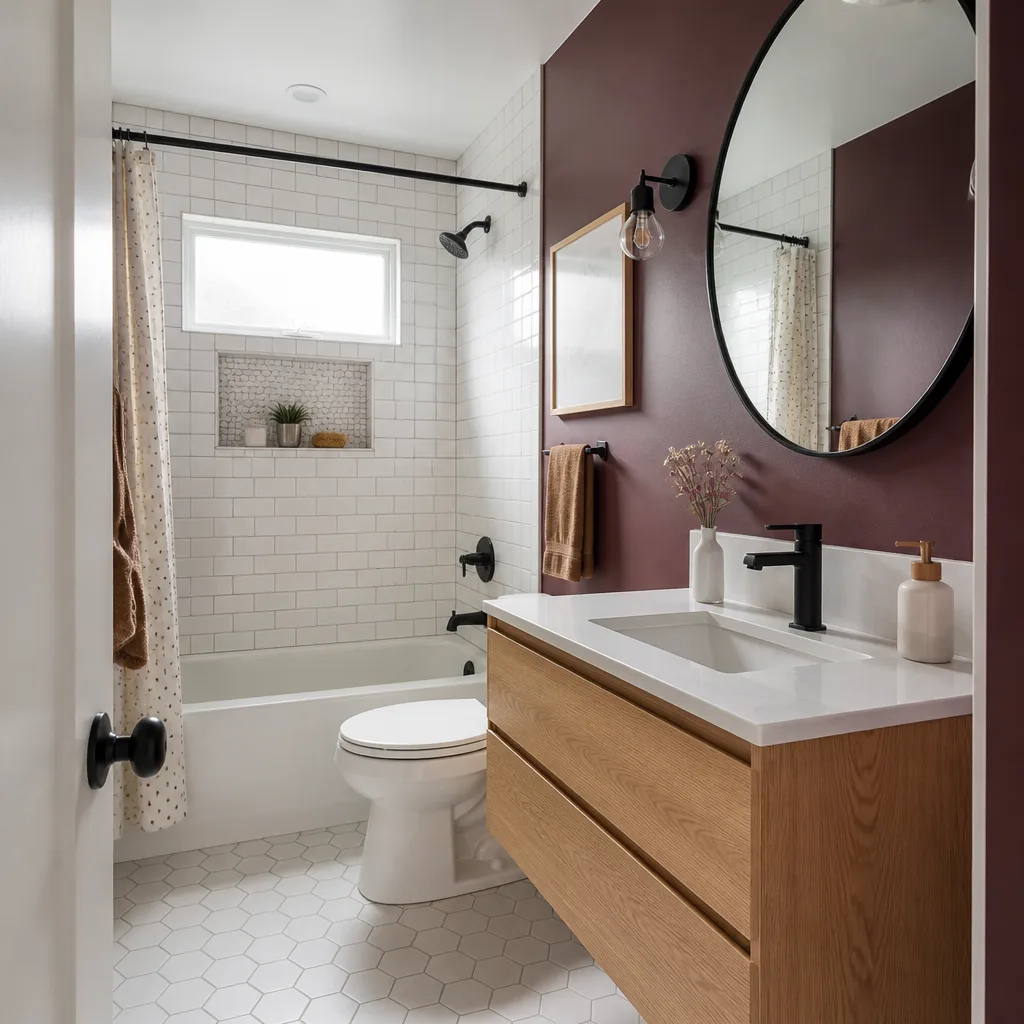
If your Santa Rosa home was built before 1990, there’s a decent chance some of the water piping is galvanized steel. Galvanized supply lines rust from the inside out, which drops your water pressure and eventually kills the flow entirely. They’re fine until they aren’t, and the failure usually happens at a joint nobody can see. Cast iron drains develop pitting and scale that choke the pipe over decades – a bathroom drain that’s slow, gurgles, or regularly backs up is a symptom, not just an inconvenience. The drain could be half plugged with rust scale.
A camera inspection of a main drain line typically costs between $300 and $500. That’s the same drain line that, if it fails during a bathroom remodel, means tearing out fresh tile to fix it. A repipe of a bathroom’s supply lines during a remodel typically runs $1,500 to $3,500. Not every pre-1990 Santa Rosa bathroom needs a repipe – some homes were already updated, some parts are fine. The goal is to know, not to guess. And here’s where a camera inspection pays for itself ten times over: the price of a surprise repipe once tile is set is the repipe plus the demo plus the tile. That’s four figures you didn’t want to see on a change order.
What a signed bathroom remodel contract should show before work begins
This is where most of the price surprises actually live: in the contract you signed, not the work itself. Before anyone starts, the contract should specify:
- Substrate remediation scope. “Replace damaged backer board” isn’t a scope – it’s a sentence. The contract should say what’s included (full backer board replacement, waterproofing membrane, specified by brand or spec) and what happens if the demo finds more.
- Fixture allowances in dollars. “Allowance $500 for vanity” tells you what you have to work with. “Allowance for vanity” means you’re choosing blind and the builder picks whatever’s cheap. The dollar amount should be printed.
- A written change order process. No work proceeds on a change without a signed change order. That includes conditions found after demo. The customer signs, the number is fixed, then work moves. Under Clause 1 of The Haven Standard, the change order is a piece of paper, not a conversation.
- A written warranty. Not a verbal “we’ll take care of you.” A written document with the terms spelled out.
Our 365-Day Done Right Promise is printed on the page. If something isn’t right within the first year, we make it right. It’s a promise backed by a terms page, not an asterisk, and it’s the difference between a construction company that puts a written number on the page before work starts and one that calls it a sale after the fact. We’ve delivered 4,000-plus projects on that basis. Every one had a written price before anyone picked up a tool.
When to call a pro
If you’re opening the wall to retile and you find rust on a supply line, crumbling paper behind the tile, or a floor that flexes when you walk, stop and call us. Most of those situations need a licensed plumber and a tile-covered permit inspection; they aren’t a do-it-yourself problem. Our technicians have up to 19 years of experience finding and documenting this kind of condition before it becomes a surprise at the end of a job.
Related services we handle across Santa Rosa: if a bathroom remodel is part of a bigger project, we can fold it into an ADU or home addition in Santa Rosa so the plumbing, electrical, and permits are drawn together. If the rest of the house is getting exterior work at the same time, our driveway and pavers in Santa Rosa and fence installation in Santa Rosa teams run on the same written-price discipline. You can see all of it on our Santa Rosa home page.
The Bottom Line
Decide based on the substrate, not the tile. If the backer board is sound, the subfloor doesn’t flex, and the drain flange is set right, a cosmetic repair is honest and the price is lower. If any of those three are wrong, a “repair” that skips demo is the more expensive long-term choice – because you’ll pay for the refile and the gut. In Santa Rosa’s older stock, that’s the more common situation, not the exception. If you’re in Santa Rosa and want a written price before anyone swings a hammer, Rowan Construction Group Santa Rosa offers free estimates. Call (833) 842-1866.
Frequently Asked Questions
A full bathroom remodel in Santa Rosa runs roughly $15,000 to $35,000 for a complete gut with mid-grade tile and fixtures, and $40,000 to $60,000 for a higher-end version with a custom shower. A surface refile that doesn’t touch substrate is about $1,200 to $2,400 for the shower surround. Call (833) 842-1866 for an exact quote – estimates are free, and under our Standard the written price is in your hand before work begins.
Test the substrate. If the backer board sounds solid, has no soft or crumbly edges, the floor doesn’t flex underfoot, and the drain flange sits properly relative to the tile, a retile is a reasonable repair. If any of those fail, you’re looking at a full remodel because the assembly behind the tile has already failed. A camera inspection of the drain line is also worth the modest cost on a pre-1990 Santa Rosa home. Call (833) 842-1866 if you want a free second opinion on a written estimate from another contractor – we’ll review it line by line.
A straight retile typically doesn’t require a permit. Any wall move, drain relocation, new electrical circuit, or shower pan replacement does, because it triggers a rough-in inspection and then a final inspection. Missing a permit typically costs more to fix than to pull. Ask the contractor to show you the permit before work begins.
Not on our jobs without a signed change order. Conditions found after demo – like a failed cast iron drain or galvanized supply lines – are documented, priced, and signed off before work proceeds. You’ll see a photo record and a change order, not a surprise on the final invoice. Call (833) 842-1866 to schedule your free estimate and see what a written scope looks like.
Written by the team at Rowan Construction Group Santa Rosa.
Need Construction Help?
Call Rowan Construction Group Santa Rosa - licensed & insured, here with fast after-hours help in Santa Rosa.
(833) 842-1866