



Free written scope consultation - allowances, timeline, and change-order rules on paper before a single trade is scheduled
Schluter Windows & Doors: The Santa Rosa Owner’s Guide
If a Schluter system at the window or door opening in your Santa Rosa home has failed, the fix is usually a trim, profile, or transition component swap rather than a full window replacement, and installed it typically runs $4,500 – $15,000 when the glass unit goes too. When it’s just the Schluter component, most of that cost drops away. We match the part to your model, name the price in writing before any work starts, and install it to finish the opening correctly.
Owners usually discover a failure the same way. A Schluter window reveal or balcony profile starts separating from the wall, water shows up as a dark tide line along the sill after the first big storm, or a sliding door’s tile-to-door transition rocks underfoot because the setting bed let go. Santa Rosa’s wet winters and dry summers put that expansion-and-contraction cycle through every opening on the house, and the membrane and trim work at the reveal take the hit first. Once you can see daylight, moisture staining, or movement, the part has usually been degrading for a season or two.
Key Takeaways
- Schluter parts at windows and doors are matched by model and opening size, not bought generically.
- Replacing a failed profile or transition is usually far cheaper than replacing the whole window.
- Water intrusion at the reveal is the symptom to act on – it grows every wet season.
- We’re an independent Santa Rosa contractor, not affiliated with Schluter. We source the right part and install it.
Which Schluter Models This Applies To
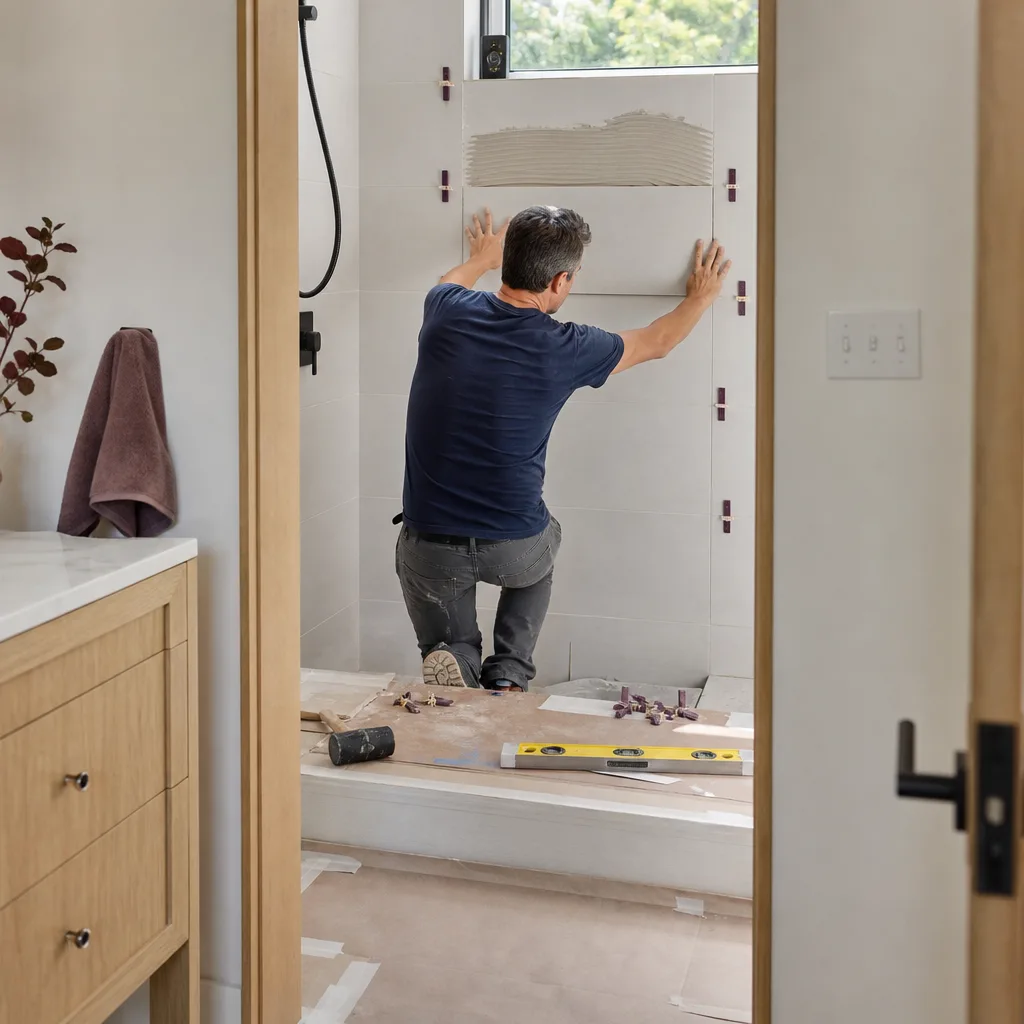
Schluter makes a broad line of profiles, edge trims, and waterproofing membranes that terminate or transition at windows and doors. The ones we see failing in Santa Rosa fall into three working categories: tile edge and reveal profiles (the aluminum or PVC trim where tile meets a window jamb or door frame), movement and transition profiles (the strip that lets two finishes or two planes move without cracking), and the waterproofing layer under it all – the bonded membrane and the banding that ties into the sill and jamb.
Identifying the right part starts at the opening. Measure the reveal depth from the finished wall face to the window frame – that number decides which profile depth you need, and Schluter profiles come in a range of depths that only look interchangeable until you’re mid-install. Check the label on any surviving original packaging, or look for an embossed brand and profile code on the trim itself. For substrate-specific choices, the profile’s material matters: aluminum where you want a crisp edge, PVC where a wet or exterior exposure calls for it.
The OEM-versus-aftermarket decision for Schluter is a real one. The genuine profile carries the exact dimensions and finish your tile and membrane were designed around, and a mismatched aftermarket trim can force different fastener spacing or a different reveal depth that changes how water sheds. For visible exterior edges, we specify the genuine profile. For concealed movement joints, a quality equivalent sometimes does the job at a lower number – and we’ll say which is which on your quote, in dollars, before anyone picks up a tool. We’re an independent Santa Rosa contractor, not affiliated with Schluter, and we also work alongside KraftMaid, Cambria, and Silestone on the rooms these openings sit in.
Styles & brands we work with
- Kitchen remodeling
- Bathroom remodeling
- Home additions & ADU
- Roofing
- Windows & doors
- Driveway & pavers
- Fence
Signs Your Schluter Windows & Doors Is Failing
- Separation at the reveal: the profile or trim pulls away from the jamb, opening a hairline gap. That gap lets wind-driven rain past the edge and into the wall cavity, which is how a small trim failure becomes a framing problem.
- Dark staining or efflorescence at the sill: a tide line or white mineral bloom along the bottom of the opening. It means water is getting behind the tile or the membrane and drying to the inside, and the waterproofing tie-in at the sill needs to be rebuilt.
- Rocking or loose transition strip: the floor-to-door profile shifts underfoot because the setting bed beneath it has lost bond. Left alone, the movement cracks the adjacent tile and the strip can lift entirely.
- Cracked or crumbling grout at the window perimeter: the joint that should be a flexible movement joint was grouted rigid, so seasonal movement tore it. Santa Rosa’s swing from wet to dry is enough to crack a rigid joint within a couple of seasons.
- Musty smell or soft drywall near the corner: moisture has traveled past the failed membrane and is trapped. By the time you smell it, the repair usually includes replacing the affected substrate, not just the trim.
See the difference
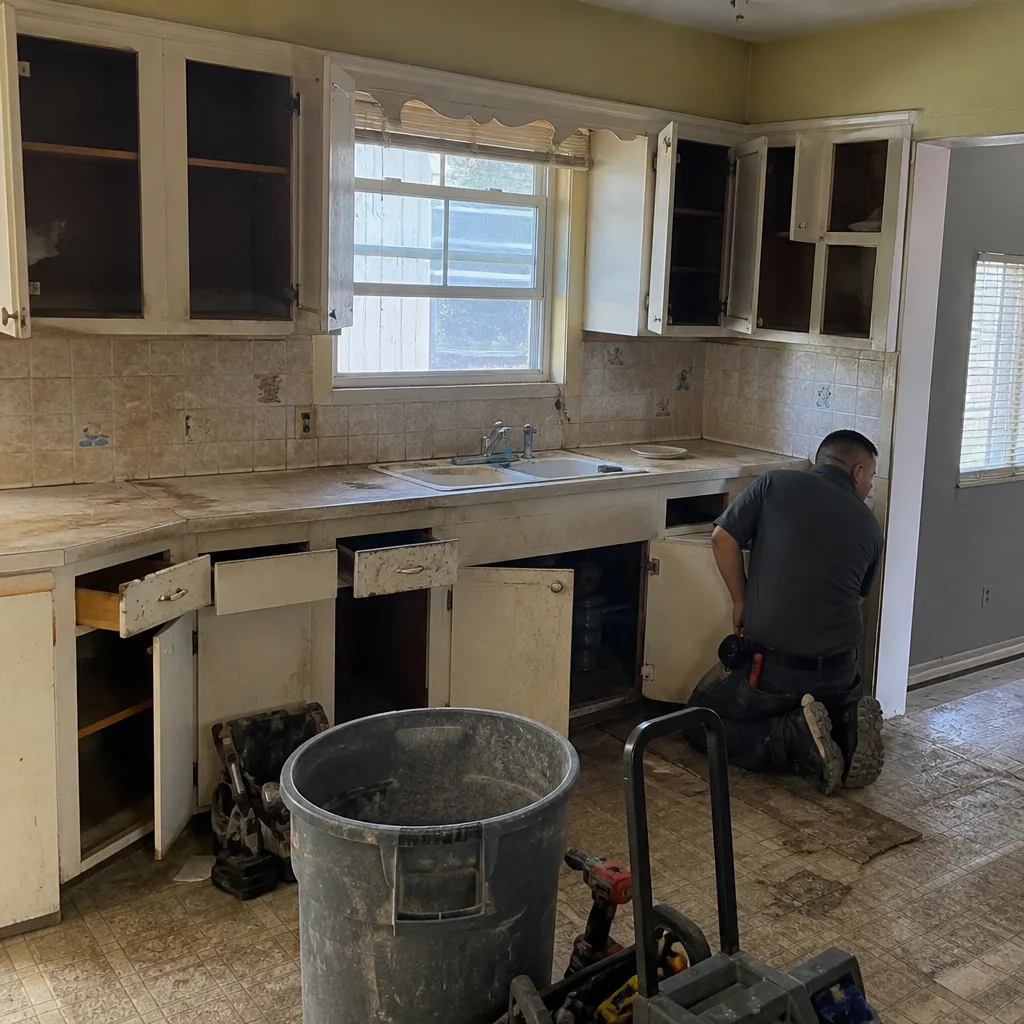 Before
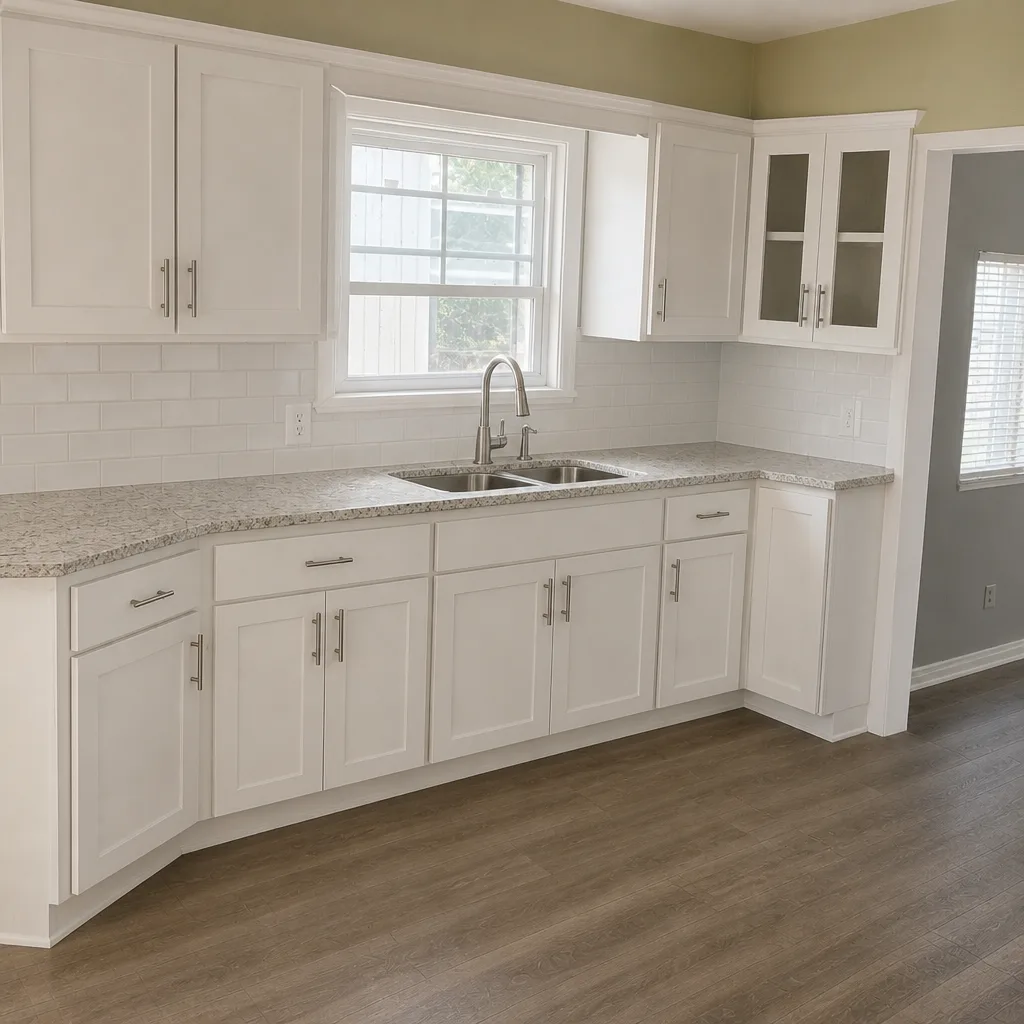 After
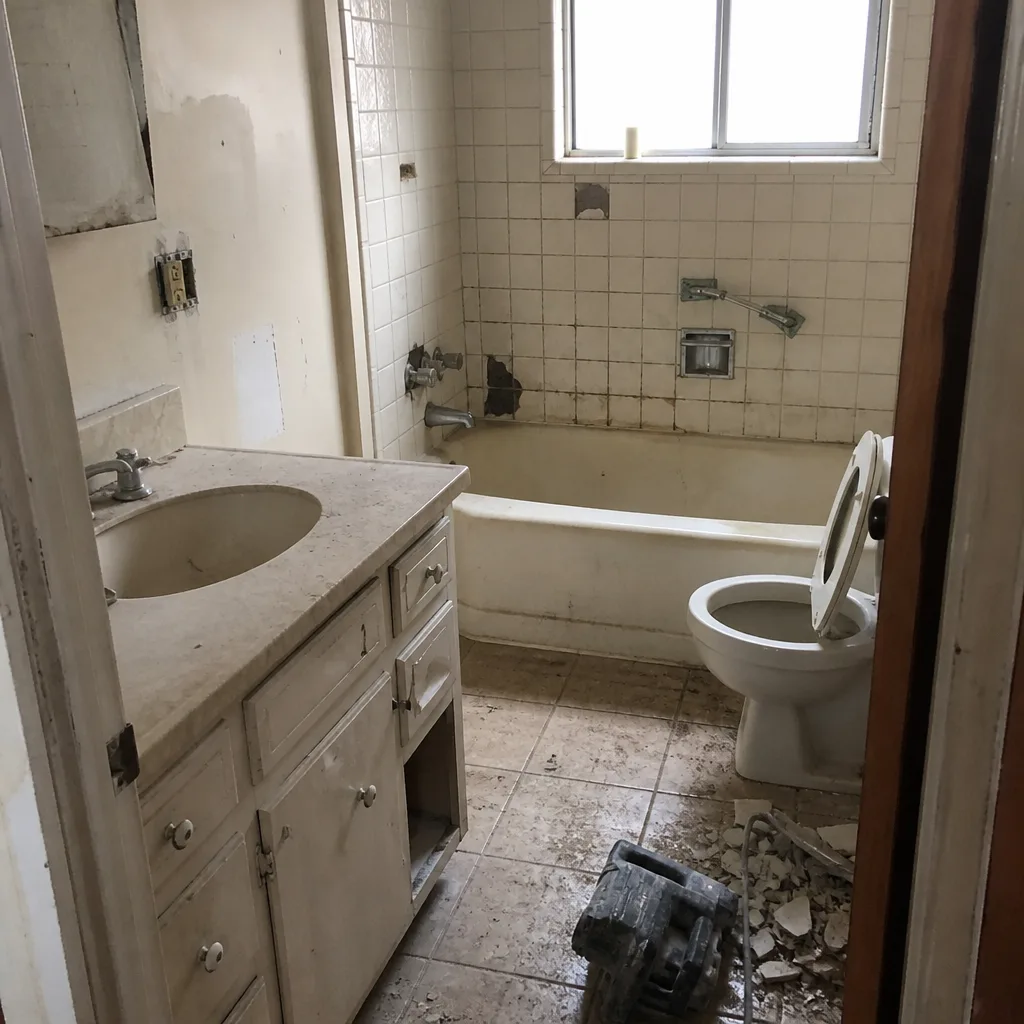 Before
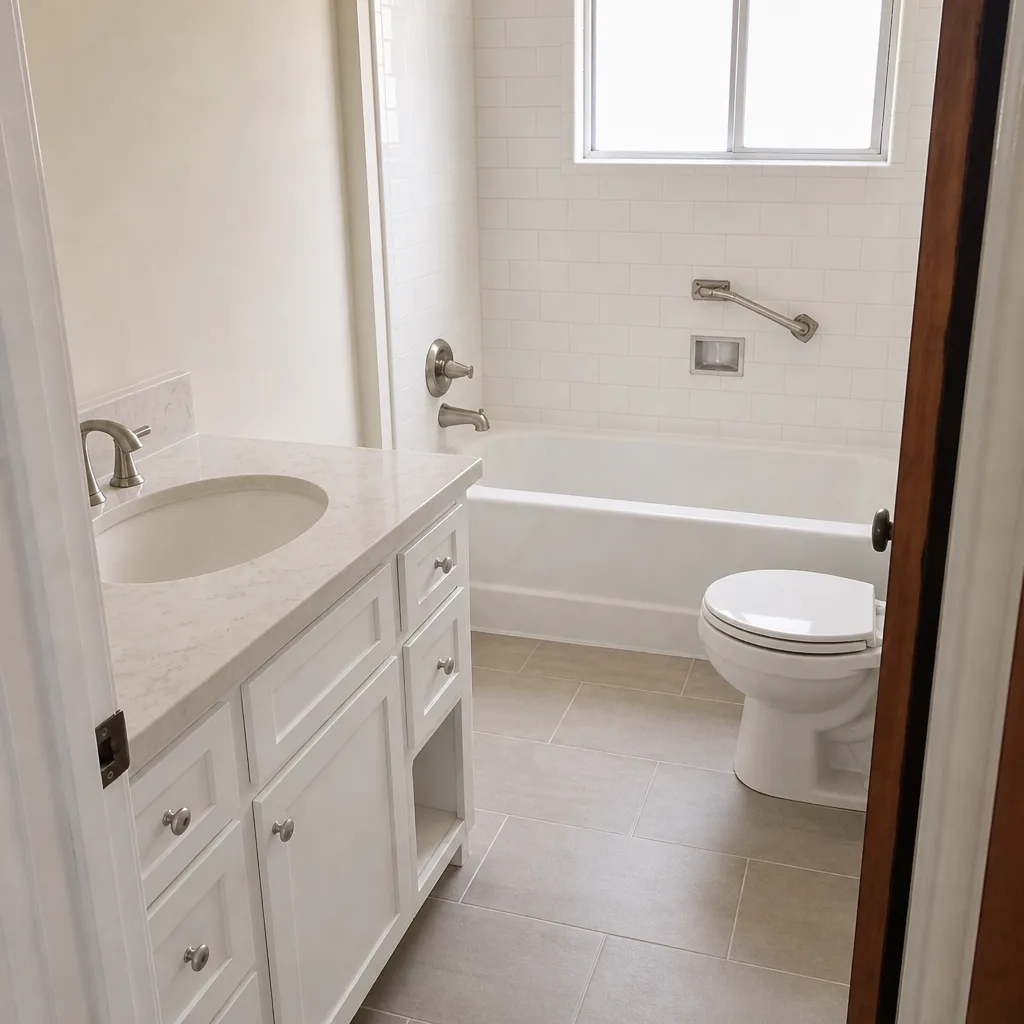 After
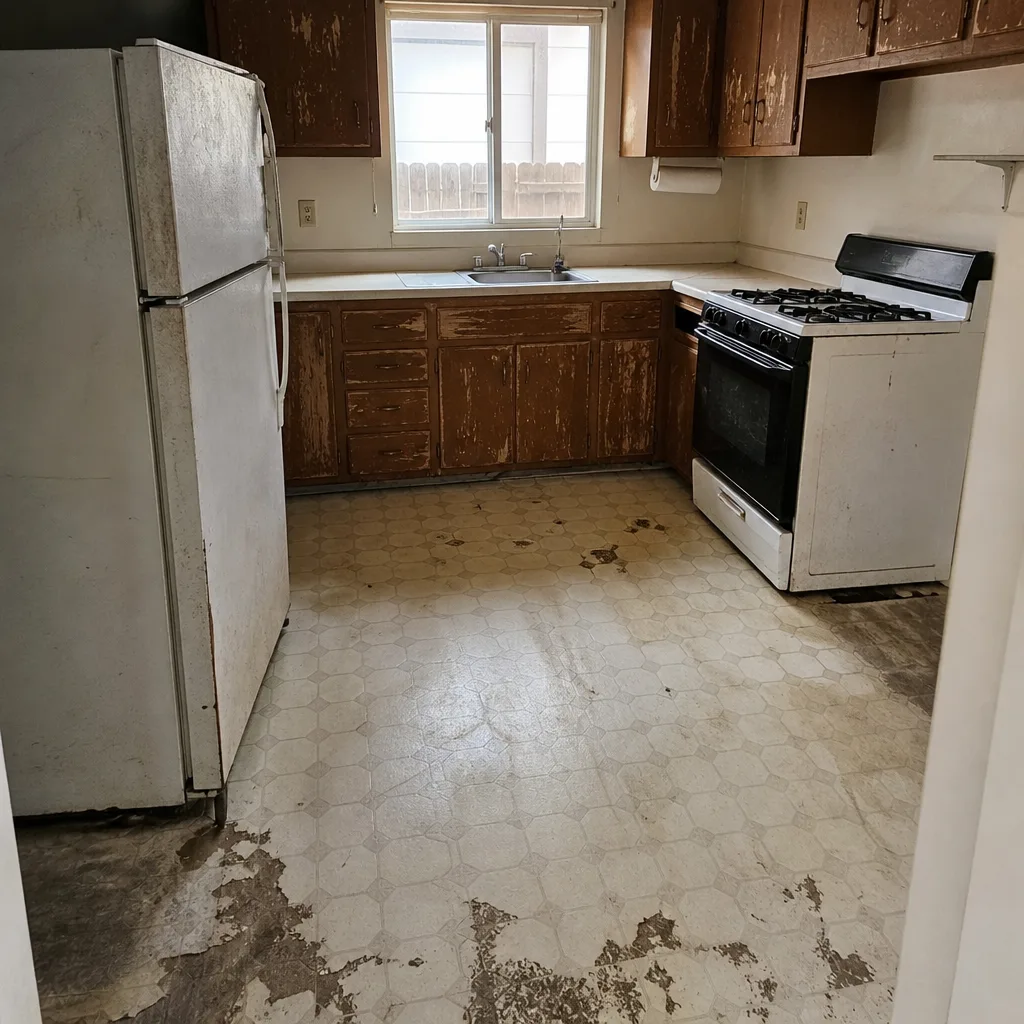 Before
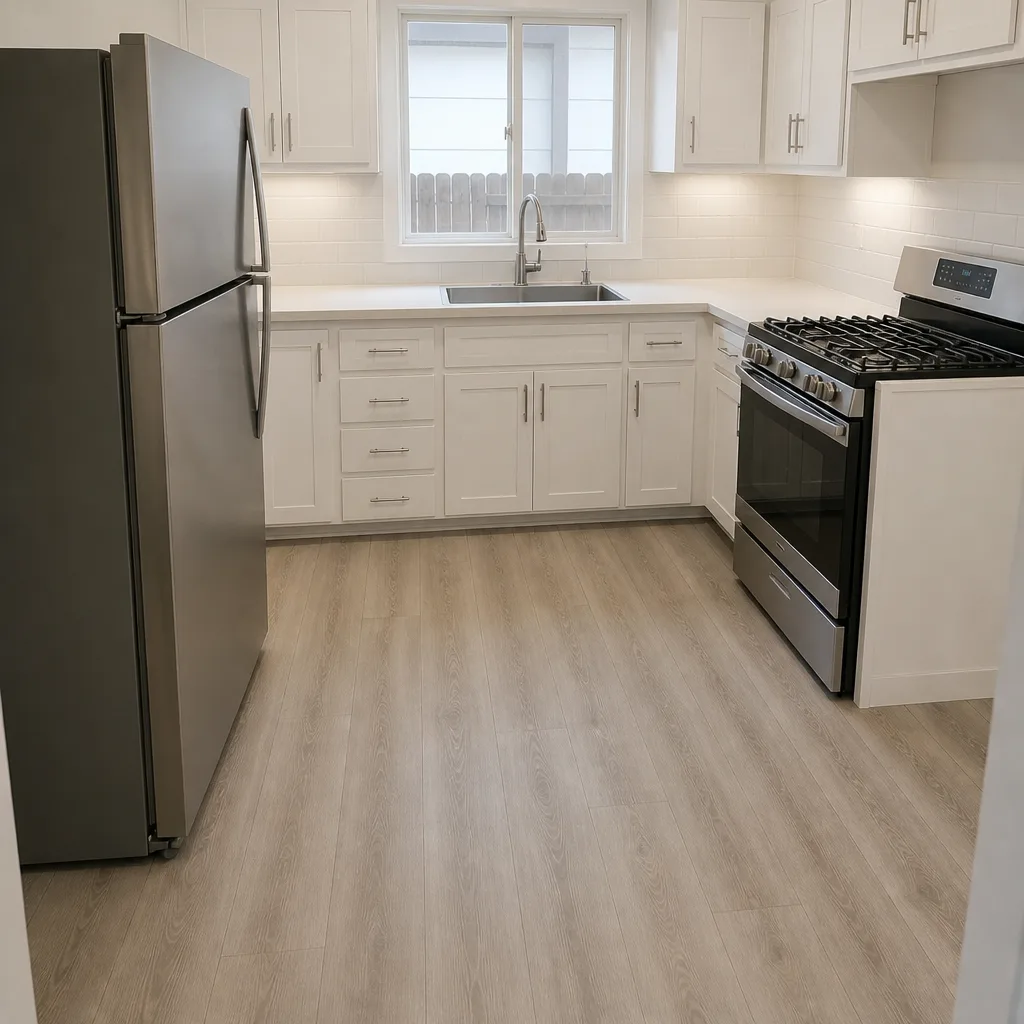 After
Replacement Cost & What’s Included
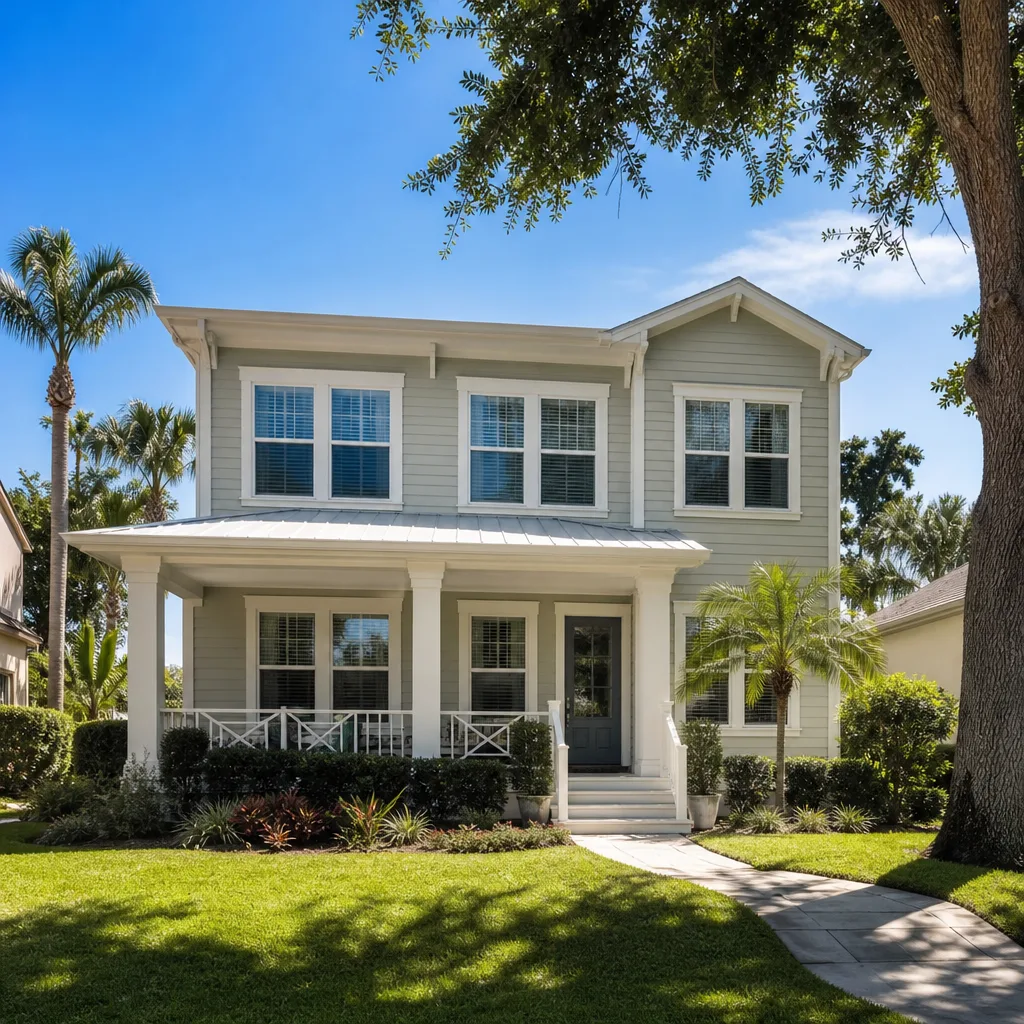
For the part-only repair – a failed profile, trim, or transition at the opening – the installed cost is the modest end of our window work. When the glass unit has to be replaced along with a corrected Schluter detail, the Santa Rosa installed ranges apply:
| Scope | Installed price range |
|---|---|
| Window replacement (with corrected reveal and membrane detail) | $4,500 – $15,000 |
| Impact window installation | $8,000 – $25,000 |
The range is driven by the number of openings, the window series and glass spec, how much of the surrounding tile or membrane has to come out to reach sound substrate, and whether the sill detail failed into the framing. Our quotes are flat and itemized: the part, the membrane and banding, the labor, and the disposal are each on the page with a number, and if the price turns out wrong on the low side, the written scope and change-order discipline mean nothing moves without your signature. We’re an independent contractor, so the part is sourced and priced straight – no inflated brand markup to absorb. Every job carries a written workmanship warranty, and we hand you a photo record of what we found and what we did when the crew leaves.
DIY or Call Us?
There’s a safe half of this and a dangerous half, and the line is the waterproofing. You can safely check it: run a finger along the reveal for gaps, press the transition strip to see if it rocks, look for staining at the sill, and confirm the window itself opens and closes without binding. None of that puts you at risk.
The DIY risk shows up when the fix means peeling back the membrane, re-bedding a setting layer, or reaching into a wall cavity to rebuild a sill that’s been wet. That work has to integrate waterproofing correctly at the jamb and sill or you’ll trap moisture and be back to staining next winter – and it often sits on a ladder or scaffold where a fall is the real hazard. Pull the wrong layer and you can void the window’s own water-resistance. If you’re unsure whether the opening is wet behind the finish, that’s the moment to stop and call. Call (833) 842-1866 and we’ll give you a free estimate and a straight read on whether it’s a part or a bigger opening repair.
FAQs
A correctly installed profile at a protected opening should hold up for the life of the tile or window, and the waterproofing tie-in behind it is expected to outlast the finish around it. In practice, failure in Santa Rosa usually traces to installation – a rigid joint where a flexible one belonged, or a sill detail that didn’t drain – not the part wearing out on its own. A well-executed opening here sees an easy 15 or more years before anything needs revisiting. If you’re not sure how yours was done, call for an estimate.
Sometimes yes – a separated profile can be re-set, and a transition strip that only lost bond can be re-bedded. Whether repair is honest depends on how much water got behind the finish. If the substrate and framing are dry and sound, we repair. If they’re not, replacing the trim alone just hides the problem for one more wet season. We look, we tell you what we found, and you get the price in writing either way. Call (833) 842-1866 for a free estimate.
A single opening with a failed profile or transition is typically a one-day repair, while a full window replacement with a corrected reveal detail often runs one to two days per opening depending on how deep the failure goes. We schedule the work and confirm it in writing, and the crew leaves you a photo record of what was found and what was done. Call (833) 842-1866 and we’ll give you a realistic timeline for your home.
We identify the part by measuring the opening and reading the profile, then match the profile depth, material, and series so it fits the membrane and finish already in place. Where the visible edge calls for it, we specify the genuine Schluter profile; for concealed joints, a quality equivalent can be the right call and we’ll tell you which is which on the quote. Because we source straight and are independent, the part is priced honestly on the page. Call (833) 842-1866 to schedule your free estimate.
Give us a call at (833) 842-1866 for a free estimate on your Schluter opening repair in Santa Rosa. We’ll name the price in writing before any work starts, show you what we found with a documented photo record, and stand behind the work with our 365-Day Done Right Promise.
Written by the team at Rowan Construction Group Santa Rosa, serving Santa Rosa and nearby areas.