
Free written scope consultation - allowances, timeline, and change-order rules on paper before a single trade is scheduled
Schluter Kitchen Remodeling: The Santa Rosa Owner’s Guide
Installing Schluter-compatible kitchen remodeling in Santa Rosa typically runs $14,000 – $45,000 for a full kitchen, with small kitchens at $9,000 – $20,000 and a backsplash alone at $800 – $2,500. The Schluter name most often enters the conversation at the waterproofing layer – Kerdi, Ditra, or the profiles between tile and drywall – and a homeowner usually discovers a problem there months after the tile went up, when a grout line above the counter starts holding moisture or a tile sounds hollow underfoot. We install to the manufacturer’s published detail, quote a flat written price before work starts, and give you a photo record of every layer before it’s covered.
That last point matters more in a kitchen than in most rooms. Santa Rosa sits in a climate that swings between wet winters and dry, warm summers, and the wall behind a backsplash or the floor under a kitchen tile field takes on moisture and releases it seasonally. A membrane assembly that was installed to spec handles that cycle. One that was skimped or installed wet does not, and the failure shows up slowly – a loose tile here, a soft grout line there – long after the original installer has moved on.
Key takeaways
- Kitchen remodel with Schluter waterproofing details: $14,000 – $45,000 in Santa Rosa.
- Cost drivers are the kitchen’s footprint, tile choice, and how much substrate has to come out.
- The most common failure we find is a Kerdi or Ditra layer that was installed over unprimed, dusty concrete or over old thinset that was never ground flat.
- We’re an independent contractor and not affiliated with Schluter – we install to their published specs and name them where they belong in the assembly.
- Written price before any work, signed change orders on every change, and the 365-Day Done Right Promise behind the result.
Which Schluter Models This Applies To
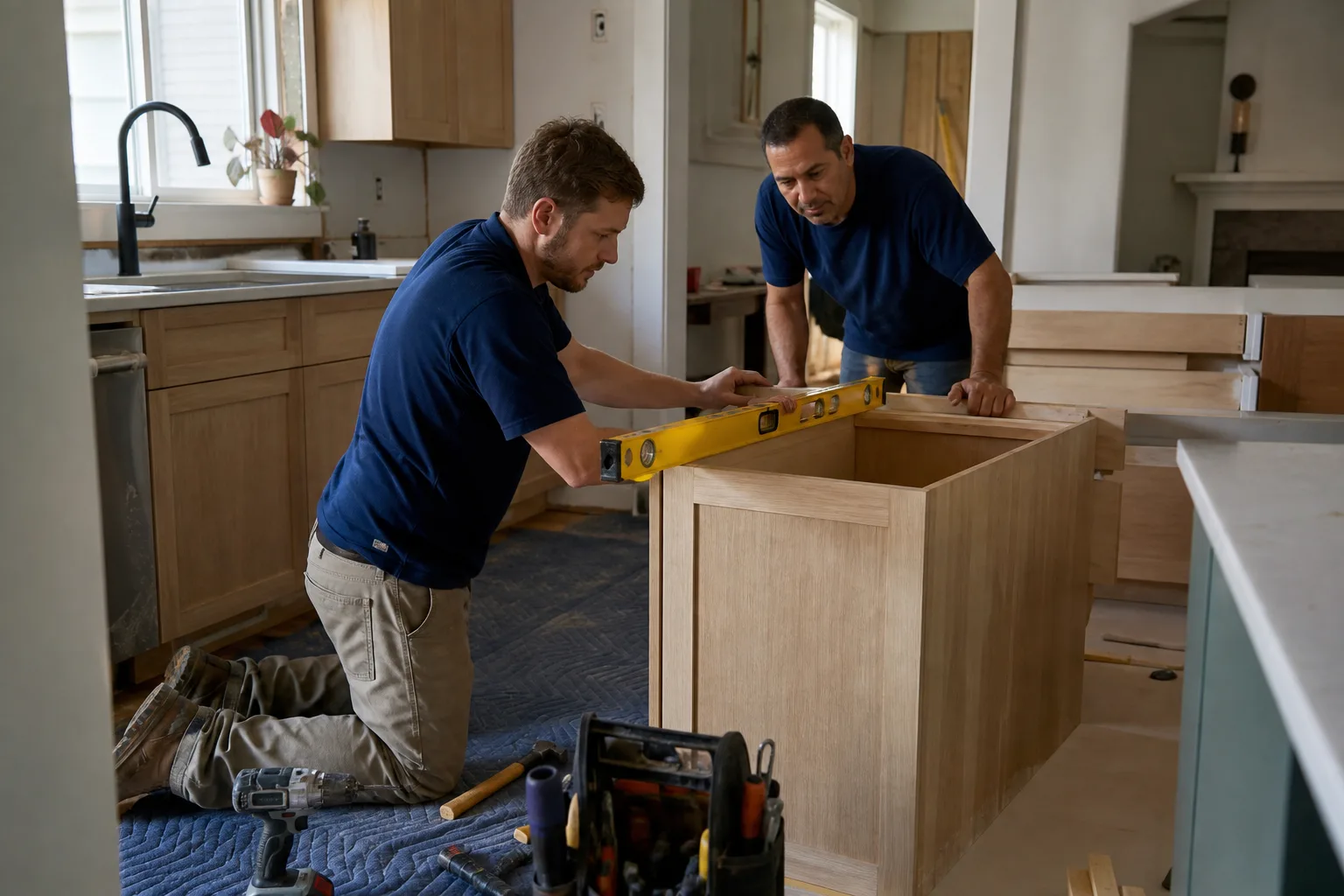
Schluter’s kitchen-relevant product lines break into three families, and knowing which one is in your kitchen tells you what to look for.
Kerdi waterproofing covers the sheet-applied roll goods (Kerdi-Board, Kerdi membrane, Kerdi-Band) and thin-set assemblies you’d find behind a tile backsplash, on a wet wall, or under a kitchen floor that meets a sink. Ditra uncoupling membrane is the floor side – the orange polyethylene mat that decouples tile from a wood subfloor so the tile field can move during Santa Rosa’s wet-to-dry seasonal shift without cracking grout or tenting. Schluter profiles are the trim line: Jolly, Rondec, Schiene, and the various edge and transition pieces that finish the tile-to-drywall and tile-to-floor joints.
To identify what you actually have, look at the edge of the exposed membrane under a cabinet toe-kick or around a floor register. Kerdi is orange fleece-faced and thin; Ditra is orange mat with square chambers visible against the edge. The printed name and lot code are usually on the underside of the roll, which means it’s under the tile – which is why we photograph the membrane before the thinset goes down.
The OEM-versus-aftermarket decision for Schluter is genuinely different from most home-repair parts. Kerdi and Ditra are patented assemblies with published thin-set bond requirements (unmodified thinset on both sides of Ditra, for example), and those requirements are what make the assembly warrantable. A generic “uncoupling mat” may look the same and use a different fleece or a lower-tolerance setting bed. We install genuine Schluter where the spec calls for it and tell you in writing when an aftermarket equivalent is acceptable – for a profile trim, usually; for a waterproofing membrane under a wet wall, rarely.
Styles & brands we work with
- Kitchen remodeling
- Bathroom remodeling
- Home additions & ADU
- Roofing
- Windows & doors
- Driveway & pavers
- Fence
Signs Your Schluter Kitchen Remodeling Is Failing
- Hollow-sounding tiles. Tap a coffee cup lightly against the tile. If most of the field sounds dull and one tile sounds hollow, that tile has lost its bond to the thinset – usually because the Ditra or Kerdi layer below it wasn’t bedded properly. It’s not urgent if it’s isolated and the grout is intact, but it’s a sign the installation was undercut and worth a look before it spreads.
- Dark grout lines above a backsplash. Grout darkening that stays dark after a cleaning is moisture wicking from behind the tile, which means the waterproofing didn’t extend past the wet area or the Kerdi seams weren’t overlapped to the manufacturer’s minimum (typically 2 inches on a horizontal). Santa Rosa kitchens on the older side often have a backsplash laid directly on drywall with no membrane – so the grout is doing the waterproofing work, and it isn’t built for that.
- Loose profile edging. A Jolly or Rondec strip that has pulled away from the drywall or tile edge usually means the profile was set with the wrong adhesive or the drywall wasn’t finished to spec before tile. Profile edges should ride on the tile edge and be bonded to the substrate, not just grouted in place.
- Tile cracking along a floor-to-floor joint. Hairline cracks that follow a straight line across a kitchen floor point to movement along a substrate joint that the uncoupling membrane was meant to absorb. If the membrane was installed over a subfloor that flexed, or if the tile was set over a piece of subfloor that wasn’t glued and screwed to spec, that movement transfers into the tile.
- Soft or bouncy spots underfoot. A floor that deflects when you walk it is telling you the subfloor is moving more than the tile assembly can absorb. In Santa Rosa’s older housing stock, that’s often a tongue-and-groove subfloor that was never given a proper underlayment before the membrane went down – and the membrane can only do its job on a stiff, flat deck.
See the difference
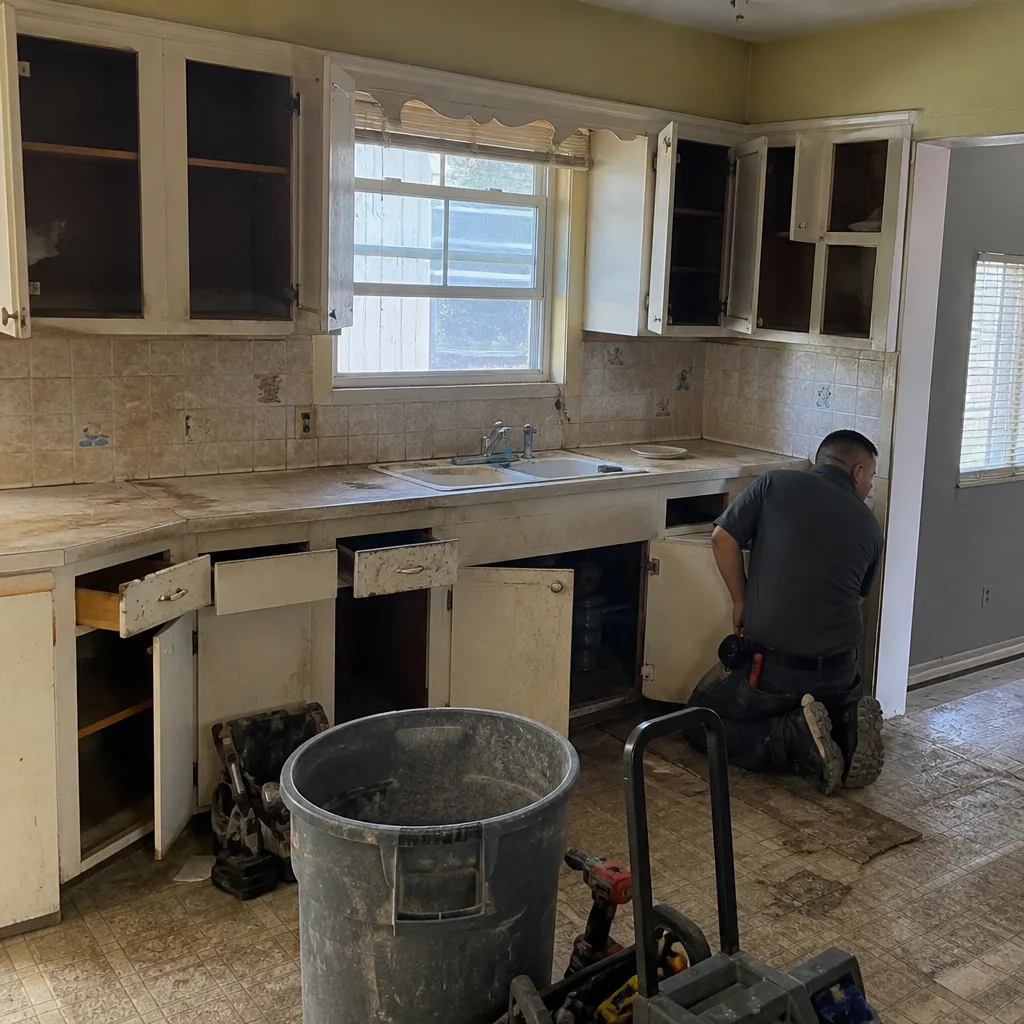 Before
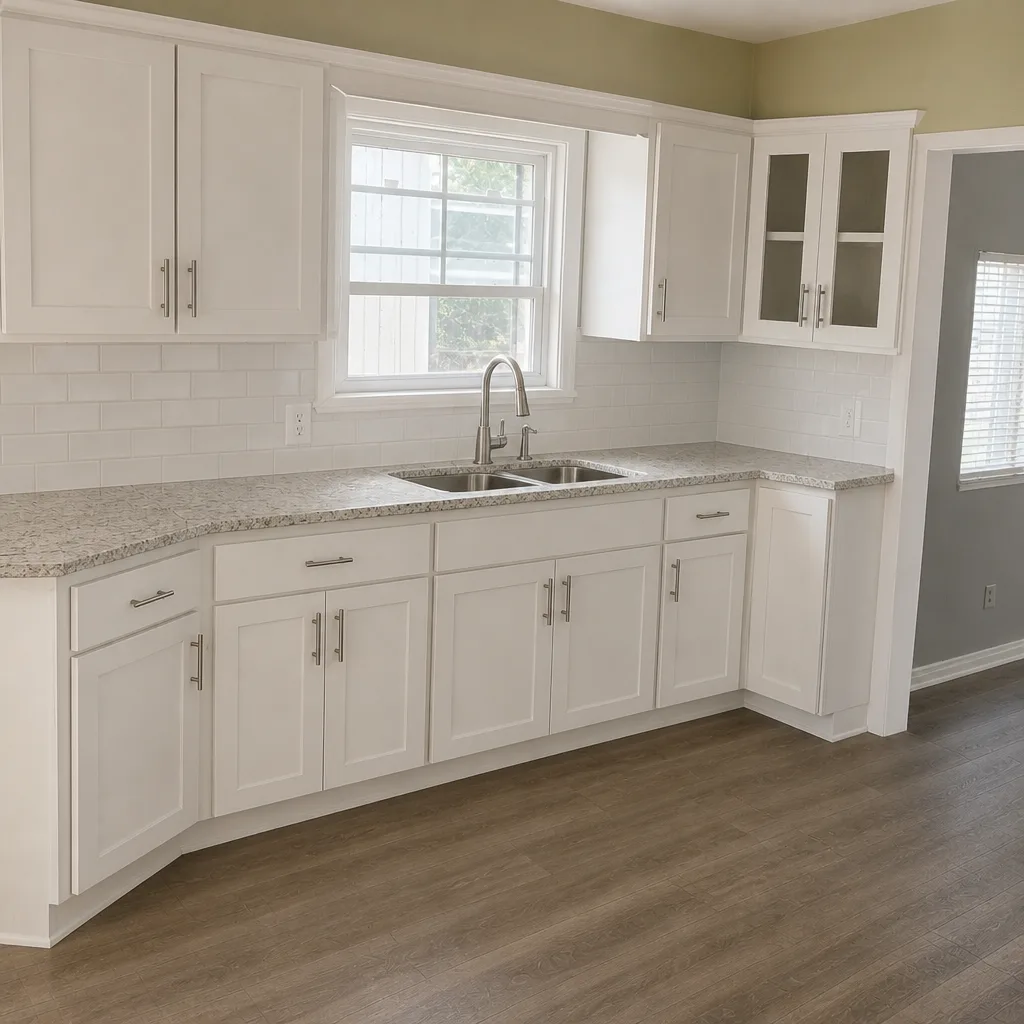 After
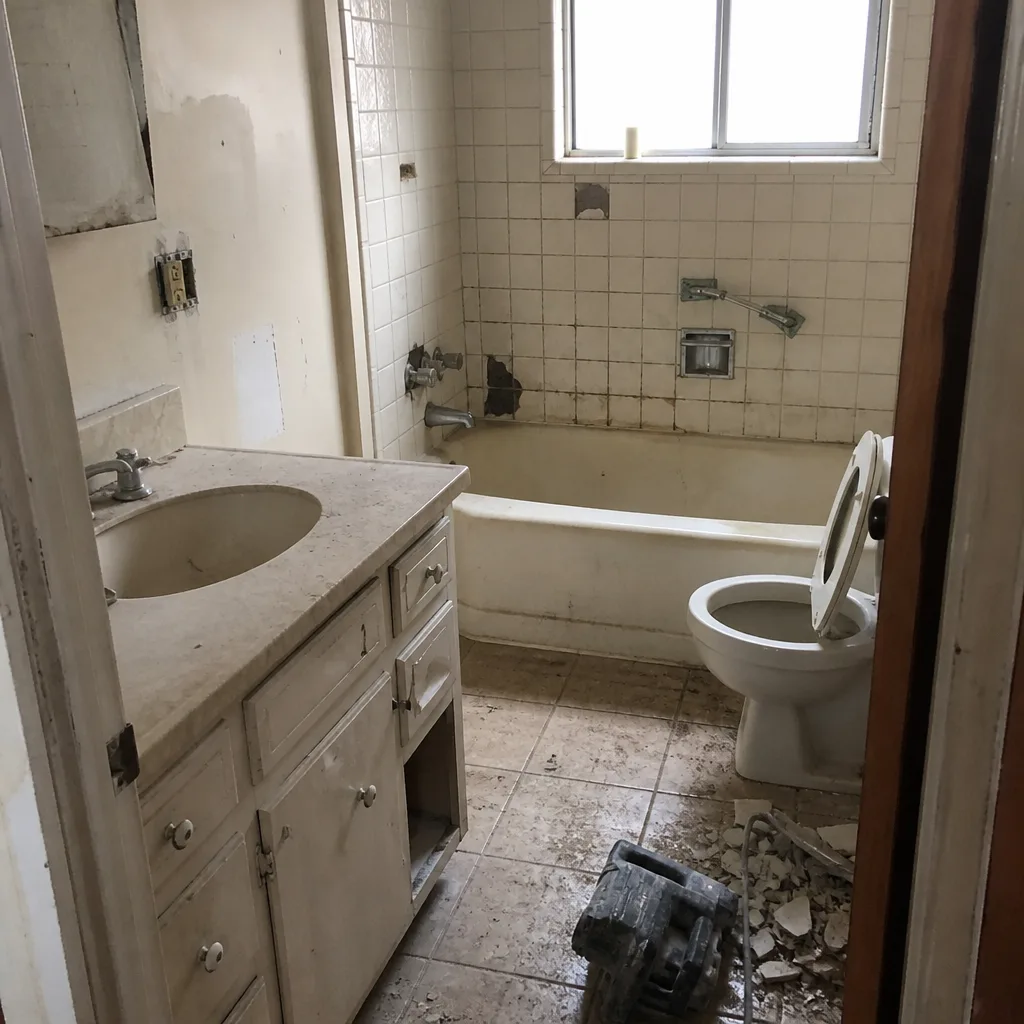 Before
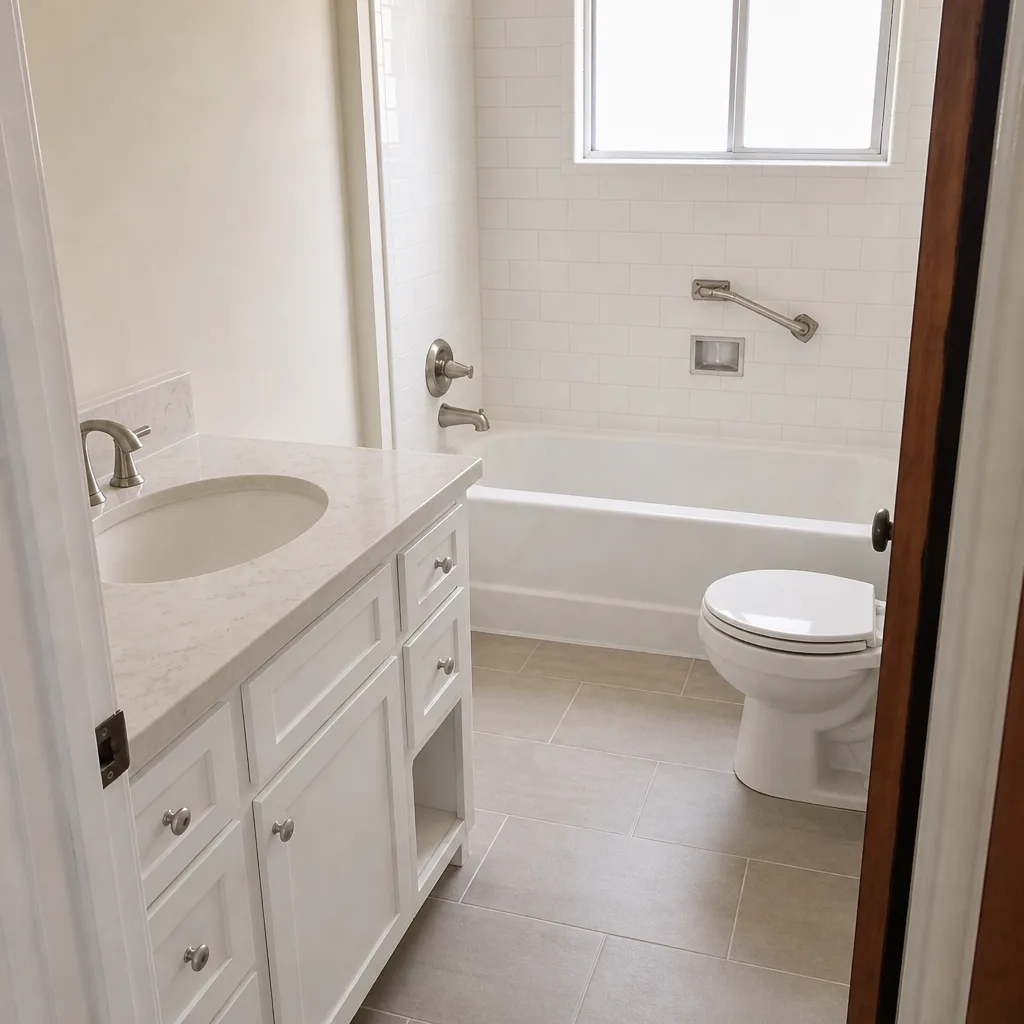 After
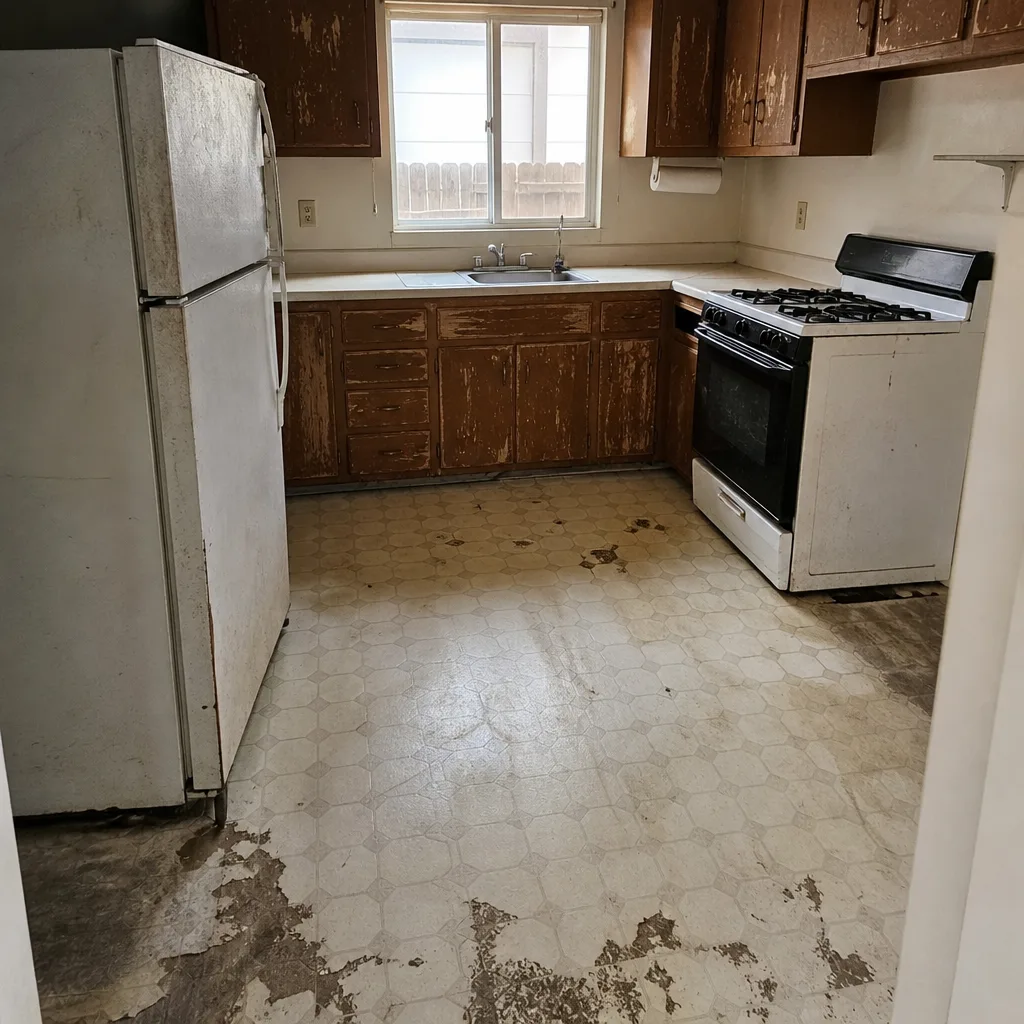 Before
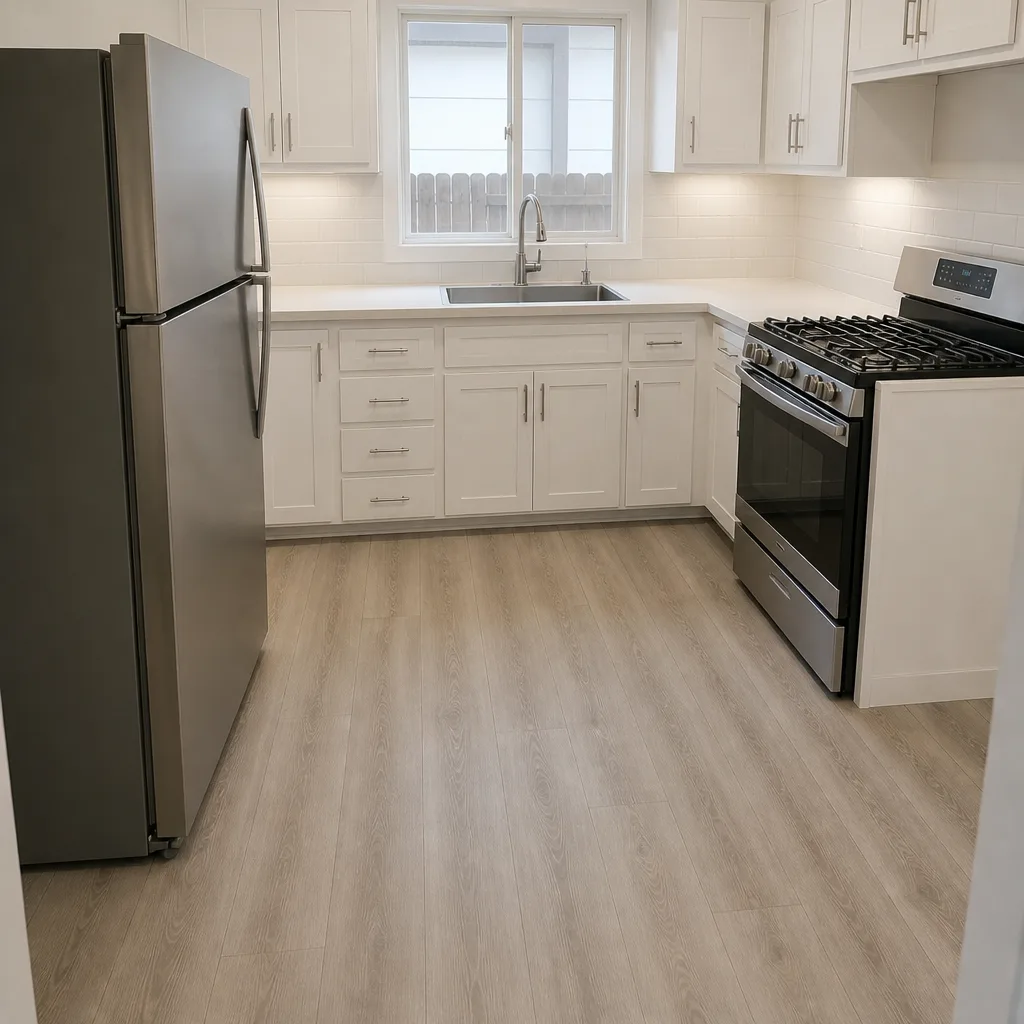 After
Replacement Cost & What’s Included
Replacing a failed Schluter waterproofing or uncoupling layer in a Santa Rosa kitchen falls inside the standard remodel ranges because the work is the same trade – tile and membrane come out, substrate is corrected, and it goes back down to spec.
- Backsplash tear-out and re-tile with Kerdi waterproofing: $800 – $2,500.
- Countertop and backsplash replacement together: $2,000 – $6,500 – often the right call when the backsplash failure has reached the countertop seam.
- Cabinet installation when the tile failure has compromised the adjacent cabinet boxes: $4,000 – $13,000.
- Full kitchen remodel including corrected membrane and substrate: $14,000 – $45,000.
- Small kitchen remodel with the same corrected assembly: $9,000 – $20,000.
The spread is driven by how much substrate has to come out, whether the subfloor needs additional underlayment or screed, and the tile choice – a large-format porcelain costs more in setting materials than a 4-inch ceramic. We quote the membrane, thinset, and profiles as line items in writing, not bundled. You see the part, the spec, and the labor side by side. The written warranty covers the workmanship; the 365-Day Done Right Promise means if something isn’t right inside the first year, we come back and make it right on our time. KraftMaid and Cambria lead the cabinetry and countertop side of most of our Santa Rosa kitchens, and Silestone is the other countertop we install most.
DIY or Call Us?
An owner can safely do a few things without taking on risk. Tap-test the tile field with a coin or the handle of a screwdriver and mark the tiles that sound hollow. Photograph the grout lines before and after a cleaning so you have a record of whether darkening returns. Read the lot number off any leftover membrane or thinset bag in the garage – it tells us what was actually installed, which saves time on the first visit. Check the toe-kick or an unfinished closet wall for the exposed edge of the membrane and photograph it.
Where DIY goes wrong is the next step. Tearing out tile to inspect the membrane is a floor-and-wall project, not a weekend project. The tile comes out in pieces, thinset has to be ground from the substrate without gouging it, the substrate has to be flat to a tight tolerance before new membrane goes down, and the correct thinset has to be used on both faces of the membrane – modified on one side and unmodified on the other, depending on the assembly Schluter published for that product. Getting that wrong is the same failure the original installer made. This is also a kitchen that’s out of service during the repair, so the sequence matters as much as the work.
The honest answer for most owners is that the tap-and-photograph stage is where your role ends and ours begins. Under Clause 1 of the Haven Standard, we put a written price in front of you before anyone picks up a tool, and we don’t start until you’ve signed the scope. Call (833) 842-1866 for a free estimate, and bring any written estimate you already have – the Free Second Opinion is a standing offer, and we’ll go through a competitor’s quote line by line at no charge.
FAQs
Installed to spec over a properly prepared substrate, a Kerdi or Ditra assembly should outlast the tile above it – a twenty-year-plus service life is normal. The failure point is almost never the membrane itself; it’s the install. Kerdi installed over unprimed or dusty concrete, or Ditra set with the wrong thinset, will fail in single-digit years even though the material would have lasted decades. Santa Rosa’s wet-winter, dry-summer cycle punishes a marginal install faster than a drier climate would, because the assembly gets stressed in both directions each year. Call (833) 842-1866 for an estimate on a membrane replacement – estimates are free.
Sometimes yes. An isolated hollow tile with intact grout can often be reset without disturbing the surrounding field, and a single failed Kerdi seam behind a backsplash can occasionally be opened, cleaned, and re-banded to the manufacturer’s overlap spec. What can’t be repaired is a membrane installed wet or over a moving substrate – that failure is systemic, and re-tiling over it just moves the problem up one layer. We tap-test the field, pull one tile for inspection, and tell you in writing which case you’re in before quoting the repair. Call (833) 842-1866 if you want that answered in person.
A backsplash-only replacement with corrected waterproofing is typically one to three days on site, plus a day or two of cure before the grout goes in. A floor membrane replacement across a full kitchen runs three to five days. A full kitchen remodel where the membrane is part of the scope is three to six weeks depending on cabinet lead time. We put a written schedule in the quote so the kitchen-out-of-service window is known before you approve anything. Call (833) 842-1866 for a schedule against your actual kitchen.
We source genuine Schluter product through the manufacturer’s dealer network – the membrane, band, profiles, and the specific thinsets their published specs call for – and we quote those as line items so you can see exactly what’s specified. We’re an independent contractor, not affiliated with Schluter; we install to their published detail because that detail is what makes the assembly work. Where an aftermarket equivalent is genuinely acceptable (profile trim, for instance), we tell you and price both options. You’ll get the spec sheet and the product names in the written quote, not a bundled line item that doesn’t name the part. Call (833) 842-1866 and we’ll walk through what’s specified for your kitchen.
Call Rowan Construction Group Santa Rosa at (833) 842-1866 for a free estimate. We’ll tap-test the existing tile, photograph the membrane wherever it’s exposed, and hand you a flat written price with the Schluter products and thinsets named as line items before any work starts – the same upfront pricing on every trade, from kitchen remodeling through home additions. If you already have a quote from another contractor, bring it: the Free Second Opinion is a standing offer, and we’ll review it line by line at no charge.
Written by the team at Rowan Construction Group Santa Rosa, serving Santa Rosa and nearby areas.