
Fence Installation: Repair or Replace? How Santa Rosa Homeowners Decide
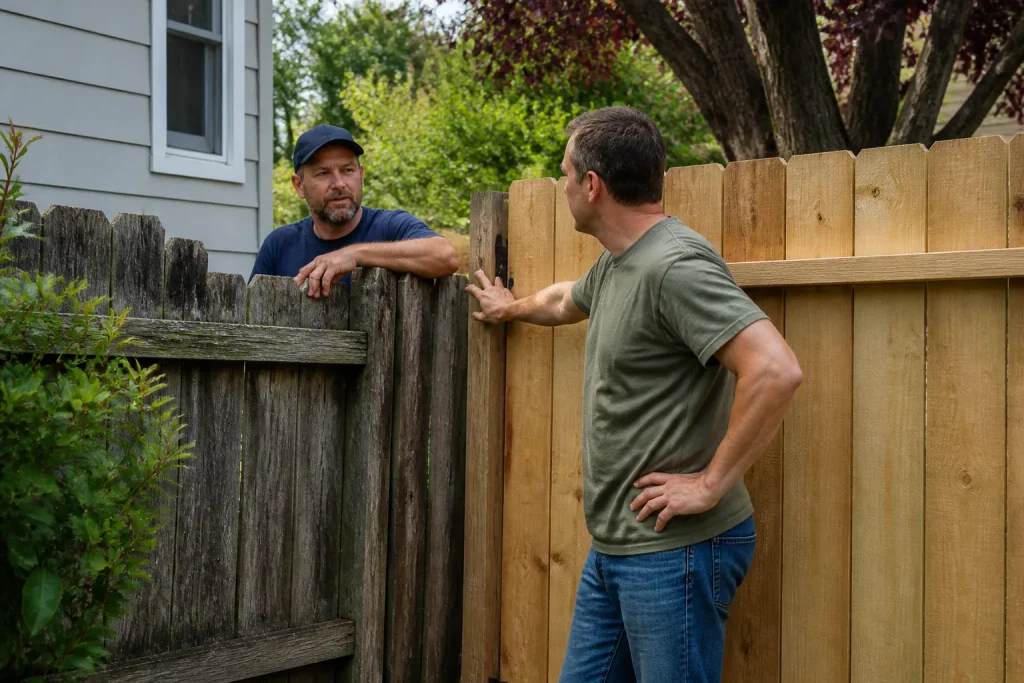
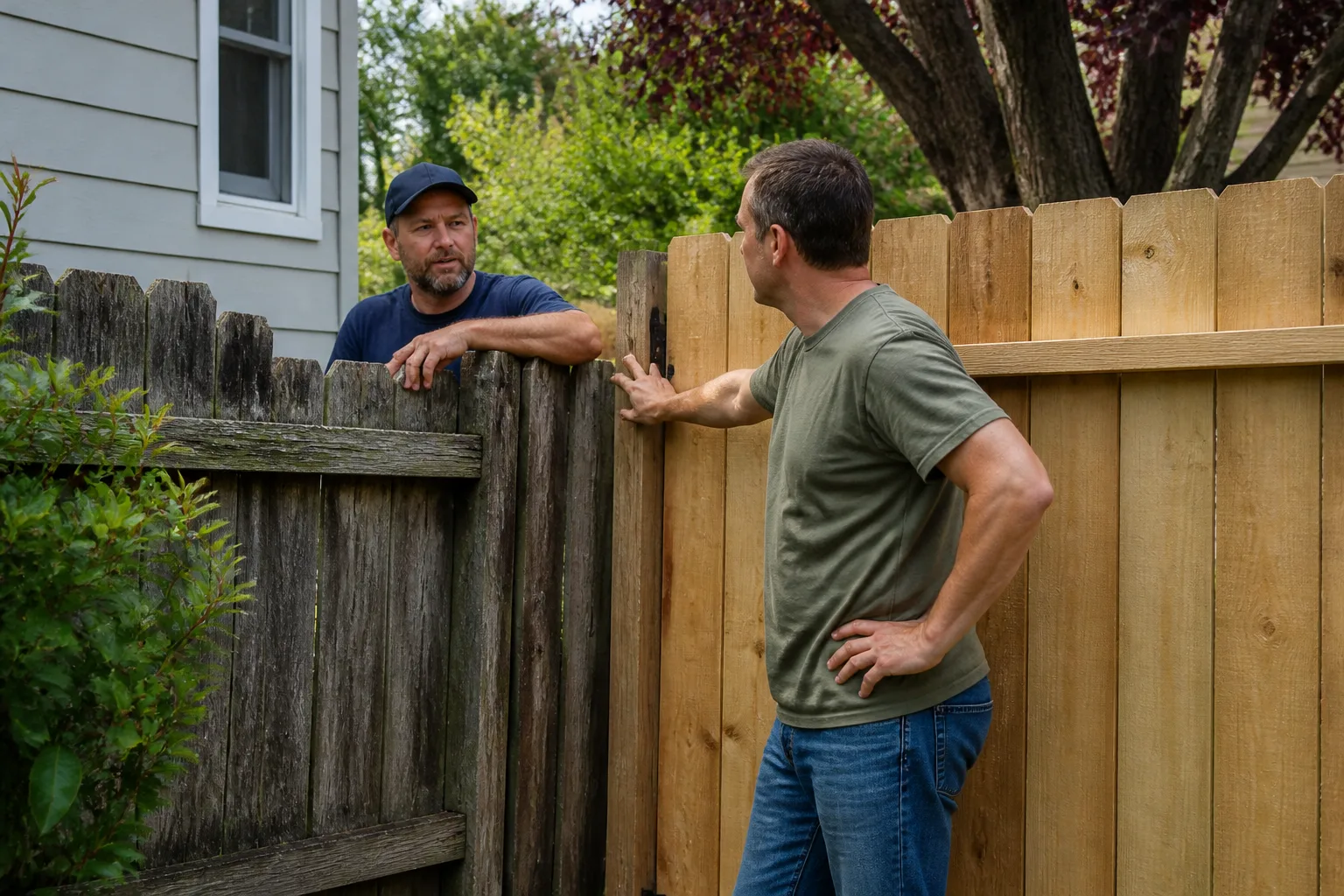
Most fences in Santa Rosa fail at the post, not the boards. A post set less than 24 inches deep in this city’s expansive clay soil will heave and lean within three to five years, no matter how straight the cedar above it looks. So when a homeowner asks us whether to repair or replace, the answer starts underground. Here’s the measurement-first way to decide: check post depth, board rot percentage, and rail integrity before you spend a dollar. If you’d rather have someone measure it for you, call (833) 842-1866 and we’ll take a look.
Key Takeaways
- A fence with sound posts and under 20% failed boards is usually a repair.
- Posts embedded less than 24 inches are a structural problem, not a cosmetic one.
- In Santa Rosa’s labor market, spot repairs run roughly $35 – $85 per board and $150 – $400 per post; a full replacement typically lands between $4,500 and $9,000 for an average residential lot.
- Redwood and cedar handle Sonoma County’s wet-dry cycle far better than pressure-treated pine.
- Get a material spec sheet, post depth spec, and written scope before anyone digs.
What Are the Three Numbers That Decide Repair vs. Replace?
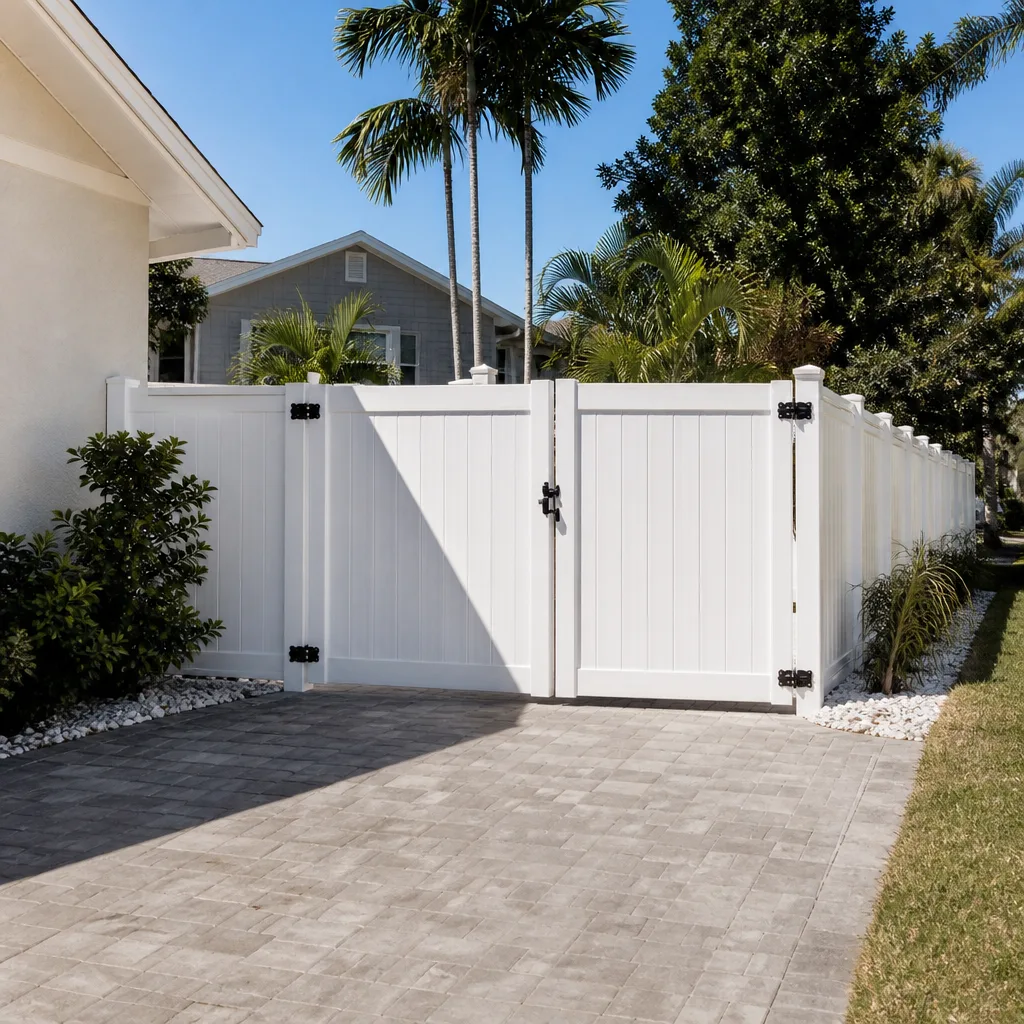
Three measurements settle the question before sentiment gets involved: post embedment depth, board rot percentage, and rail integrity. We check all three on every fence estimate because a repair that ignores any one of them is money spent on the visible symptom rather than the actual failure.
Post embedment depth. In Santa Rosa, a post should sit at least 24 inches below grade, and many contractors go to 30 or 36 inches in the heavy clay pockets around Coffey Park and the Roseland flats. When a post has heaved up to 18 inches, no amount of new pickets fixes the lean. The post is the foundation. The boards are the siding.
Board rot percentage. Walk the run and count. If more than 20% of the pickets are soft at the bottom, split, or showing termite galleries, replacement starts to pencil out. Below 10%, a repair is nearly always the better buy.
Rail integrity. Grab a top rail and shake it. If the rail moves but the post doesn’t, the fasteners or rail ends have failed and can be sistered. If the post rocks in the ground, you’re looking at post replacement, not rail replacement, and that changes the math.
Here’s a real one: we pulled a run of fence behind a house off Yulupa Avenue last spring where the homeowner had replaced 14 pickets the year before. The posts were set at 16 inches and the whole run was leaning six degrees. The new pickets were straight as piano keys and bolted to a foundation that had already quit. That’s the pattern to avoid.
How Much Does Fence Repair Cost in Santa Rosa in 2026?
Fence repair in Santa Rosa runs roughly $150 to $400 per post, $35 to $85 per board, and $600 to $1,400 per section when rails and posts both need attention. These are real labor-market numbers for Sonoma County, not national averages; local crews bill $75 to $110 per hour and dump fees for old material add $80 to $200 to a typical job.
Line-item ranges for repair work:
| Repair item | Typical Santa Rosa cost |
|---|---|
| Single picket or board replacement | $35 – $85 |
| Full post replacement (dug, reset in concrete) | $200 – $400 |
| Rail section sistered or replaced | $90 – $180 per rail |
| Full 8-foot section (posts + rails + pickets) | $600 – $1,400 |
| Gate rehung or rebuilt | $250 – $600 |
Compare that to full replacement, which typically runs $42 to $68 per linear foot for a standard 6-foot wood fence in Santa Rosa. A 150-foot property line lands between $6,300 and $10,200 depending on material, gate count, and whether the old fence sits over hardscape or a retaining wall. A smaller lot of 80 feet comes in closer to $3,400 to $5,400.
The math question is simple: if a $400 repair buys five more years, do it. If it buys one season, put that $400 toward a replacement you’ll need anyway. The three numbers in the section above tell you which you’re in.
Which Wood Species Actually Holds Up in Sonoma County?
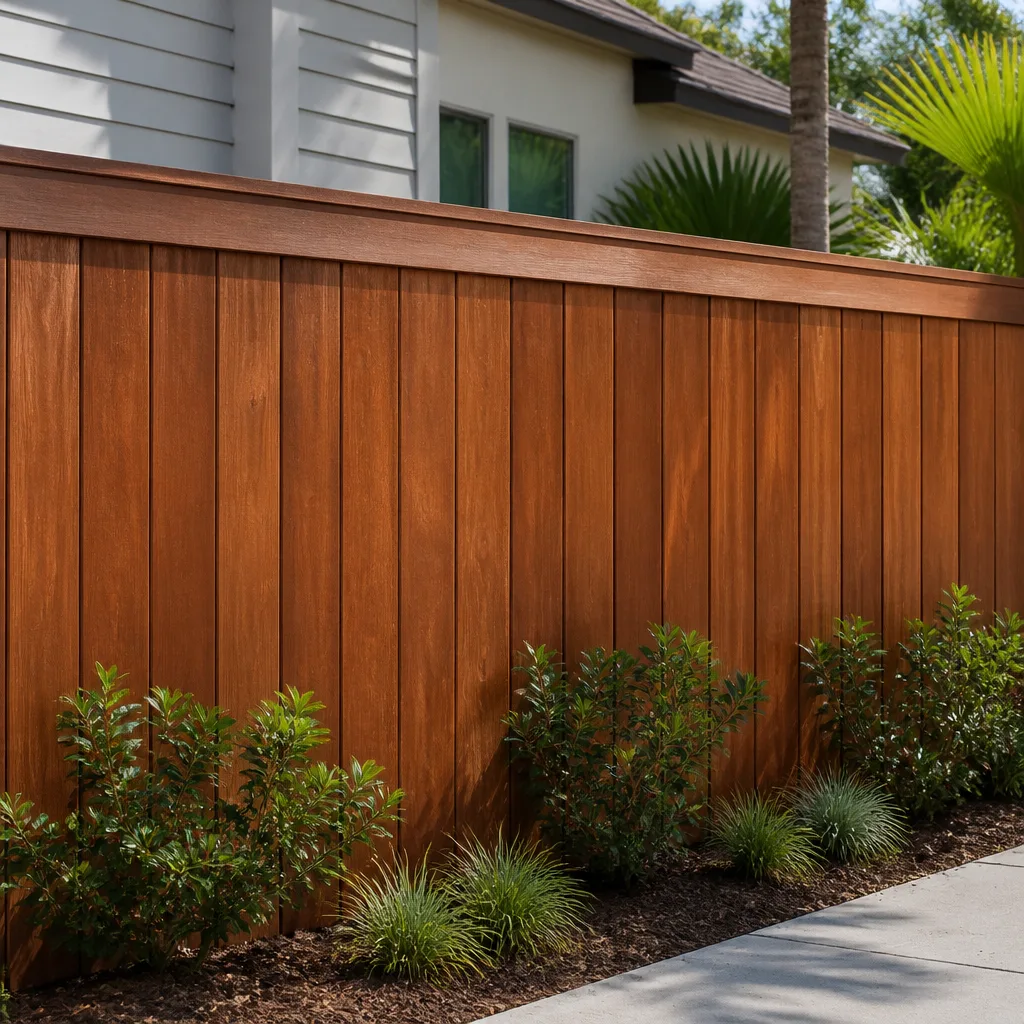
For Santa Rosa fences, redwood is the best value over its service life, cedar is a close second, and pressure-treated pine is the budget choice that costs more over time. Our wet-dry cycle (damp winters, hot dry summers) punishes pine harder than redwood because pine moves more as it cycles, and the checking and splitting that follows invites rot at the fastener lines.
- Redwood (clear or construction heart): 20 to 25 years typical service life, naturally rot-resistant, the standard for Santa Rosa fences since long before either of us got here.
- Western red cedar: 15 to 20 years, lighter weight, takes stain well, slightly softer and more prone to dents.
- Pressure-treated pine (ground contact rated): 10 to 15 years if it’s actually rated for ground contact; less if a builder used the standard above-ground rating in the dirt, which we see more often than we’d like.
Brand matters at the concrete level too. Sakrete fence-post mix sets a post predictably; we specify it on every post we reset because the curing is consistent and you don’t get the random voids you see with dry-dumped bags. That consistency is what keeps a post from rocking two winters later.
When we quote a fence job in Santa Rosa, the species is named on the quote along with rail spacing, post depth, and fastener gauge. Every project is quoted with a flat written price before anyone digs a hole, and no change proceeds without a signed change order, which is the whole reason our numbers stay within a few percent of what’s agreed.
Does a Fence Repair Need a Permit in Santa Rosa?
In most cases, a straightforward repair does not need a permit. Replacement and new construction are different animals. Santa Rosa’s zoning sets fence height limits by the underlying zone: many residential zones cap front-yard fences at 3 to 4 feet and side and back-yard fences at 6 feet, with measurement taken from the higher adjoining grade. Anything taller, or a fence over 6 feet that functions as a screen wall, usually requires a permit.
A repair crosses into permit territory when:
- You’re replacing more than a small percentage of posts, which can reclassify the work as new construction.
- The fence is on a property line and the neighbor’s rights are in question.
- The fence sits within a required setback or a front-yard sight triangle.
- A retaining wall is being added to correct grade under the fence.
Title 24 energy rules don’t apply to outdoor fencing directly, but if your fence adjoins an ADU or addition project, the whole permit package matters, which is why we treat fence height and setback as part of the site plan rather than a separate small job. This is also where scoping the work with a contractor who pulls permits and passes inspections saves trouble: a fence that gets flagged after the concrete sets is a fence you take down.
If you’re also planning a pad or patio, our team handles Driveway & Pavers in Santa Rosa on the same site plan so the fence line and the hardscape agree before anyone breaks ground.
What Documentation Should You Require Before Any Fence Work Starts?
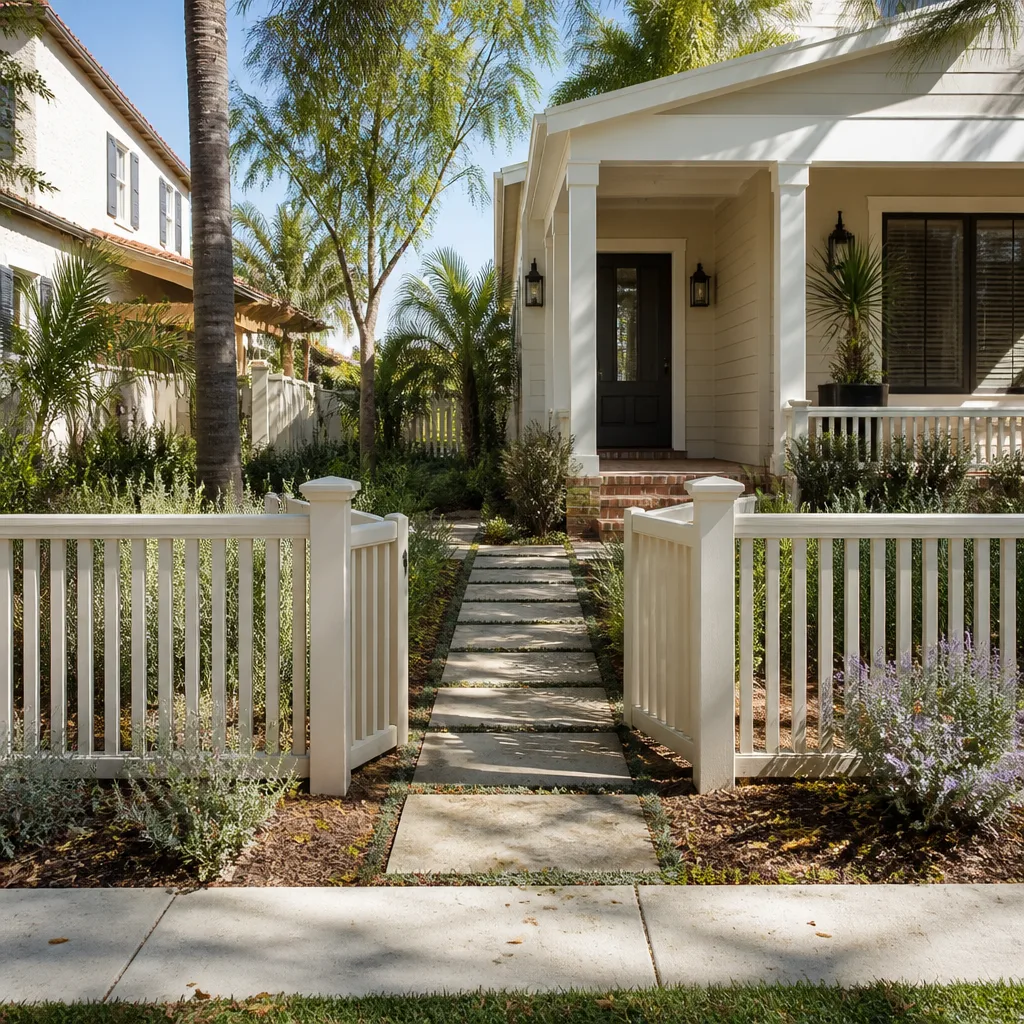
Before a single post is dug, ask for three documents: a material spec sheet, a post depth specification, and a written scope of the repair. A contractor who can’t produce all three in writing is guessing at your expense.
- Material spec sheet: Species, grade (clear heart vs. construction heart redwood), board thickness, and fastener type. Cedar and redwood should be named on the sheet, not “wood fence.”
- Post depth specification: The number in inches. Anything under 24 inches in Santa Rosa clay is a future lean.
- Written scope of the repair: Which posts, which rails, which pickets, by count and location. “Repair fence” is not a scope.
You should also get a documented photo record. Under our Haven Standard, every visit includes photos of what we found and what we did, and that record goes to the homeowner as a standard deliverable rather than an upsell. It’s the difference between a contractor telling you the post was rotted and a contractor showing you the cross-section at the base.
Asking for a free second opinion is fair game too. Bring a competitor’s written estimate and we’ll review it line by line at no charge, which is often where we catch a repair quote that’s really a replacement quote wearing thin, or the reverse.
When Should You Call a Pro Instead of Repairing It Yourself?
Call a professional when the damage goes past the pickets: rotted posts, leaning runs, termite activity along the base, or a gate that’s dragging after two shim attempts. Those are the jobs where a DIY repair most often turns into a costlier replacement, because the real problem is below grade and can’t be seen from above it.
We’ve also seen enough fence-building mistakes from homeowner do-overs to know the pattern: a post set in dry concrete, a rail fastened with the wrong gauge, a picket run with no expansion gap in summer that splits every third board by February. A professional does the measuring once. Our technicians have up to 19 years of experience, and the crews show up background-checked and uniformed with a live person answering calls around the clock.
For Santa Rosa homeowners who want the whole property line handled end to end, that’s our Fence Installation in Santa Rosa service, and it’s the same written-price discipline we bring to a full ADU project. If you’re dreaming about an in-law suite behind the new fence, our Home Additions & ADU in Santa Rosa page covers the permit and setback side of that.
Is It Cheaper to Repair or Replace a Fence in Santa Rosa?
Repair is cheaper when posts are structurally sound and fewer than 20% of boards have failed. Replacement is cheaper over a five-year horizon when posts are shallow or rotted, because repeated repairs to a failing foundation cost more than one clean install.
Run the numbers on paper before you decide. A single $400 post repair on a fence with two more bad posts will feel cheap in March and expensive by October. A full replacement on a 120-foot run at $50 per foot runs about $6,000 and gets you 20 to 25 years with redwood. That’s roughly $240 to $300 per year of service, and it’s the number to compare against the recurring repair you’re considering.
If you’re thinking about replacing the fence alongside other outdoor work, our team can quote it as a package with the paving or the home addition in one written scope. That’s how we build a documented record on every job.
The Bottom Line
Repair your fence if the posts are deep, the rails are solid, and under 20% of the boards have failed. Replace it if the posts are shallow, leaning, or soft, and if the failed board count has crossed that line. Measure before you spend; the number that matters most isn’t the one above ground. Every project we touch starts with a flat written price and written scope, backed by our 365-Day Done Right Promise and the Haven Standard.
If you’re in Santa Rosa and need help with a fence, siding, or a bigger site plan, we offer free estimates and no-hassle upfront pricing. Call (833) 842-1866 to schedule yours and see the Rowan Construction Group Santa Rosa home page for the full list of trades we cover.
Frequently Asked Questions
Fence repair in Santa Rosa typically runs $35 – $85 per board, $200 – $400 per post replacement, and $600 – $1,400 per full section. Labor is billed at local Sonoma County rates, so expect the higher end if the old material needs hauling and dump fees. Call (833) 842-1866 for an exact quote; estimates are free.
Yes, and it’s often the smart move. If the boards and rails are sound and only one or two posts have heaved or rotted, a post replacement resets the run for years. The caveat: reset posts should be set at least 24 inches deep and cured in proper concrete mix like Sakrete, or the lean returns.
Usually not for a straightforward repair. Permits come in when the work is really replacement, when the fence exceeds the height limit for its zone (often 3 – 4 feet in front yards and 6 feet at the side and rear), or when a retaining wall is added to correct grade. If your repair crosses into any of those, it needs a permit.
Twenty to 25 years for clear or construction heart redwood, 15 to 20 for cedar, and 10 to 15 for pressure-treated pine rated for ground contact. Santa Rosa’s wet winters and dry summers accelerate the failure on any species that isn’t rot-resistant, and post depth matters as much as the wood itself. Call (833) 842-1866 for a written price on a replacement.
Written by the team at Rowan Construction Group Santa Rosa.
Need Construction Help?
Call Rowan Construction Group Santa Rosa - licensed & insured, here with fast after-hours help in Santa Rosa.
(833) 842-1866